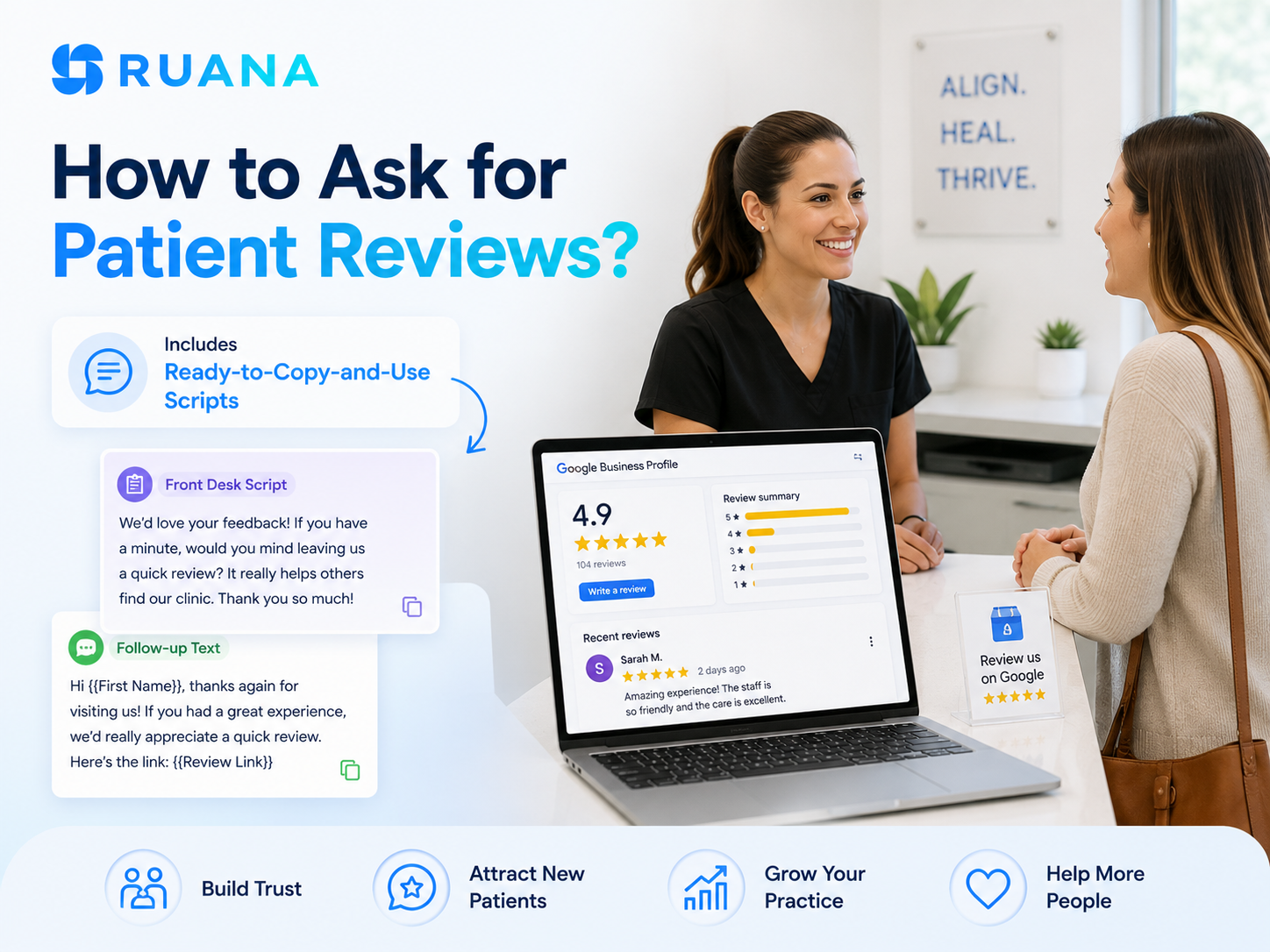
How to Get Patients to Write Reviews: 12 Scripts That Feel Natural
24.07.26
Asking patients for Google reviews doesn't have to feel awkward or pushy. This practical guide gives health and wellness practitioners a word-for-word framework for when to ask, what to say, and how to build a consistent review system that grows your practice on autopilot.
Most patients are happy to recommend a chiropractor, massage therapist, or other wellness provider after a positive experience. The problem is that many practices never ask. Others wait too long, bring it up awkwardly, or send a generic message that feels more like marketing than a genuine request.
Getting more reviews usually doesn’t require better care. It requires a better process.
Patients are far more likely to leave a review when the request comes at the right moment, sounds natural, and takes less than a minute to complete. They don’t need to be convinced. They simply need a reminder while the visit is still fresh.
In this guide, we’ll cover when to ask for reviews, what Google allows, what to avoid, and share 12 ready-to-use scripts you can adapt for your own practice.
Can Healthcare Practices Ask Patients for Reviews?
Yes.
Healthcare and wellness practices can ask patients to leave reviews as long as the request is honest, voluntary, and based on a real experience. In fact, asking consistently is one of the best ways to build a review profile that reflects the quality of your care.
The key is to invite feedback rather than influence it. Patients should never feel pressured to leave a review or pushed toward writing something positive. Your role is simply to make it easy for people who already want to share their experience.
That approach benefits everyone. Future patients get a more accurate picture of your practice, while you build an online reputation based on genuine experiences instead of occasional feedback from only your most enthusiastic patients.
What Google Allows
Google allows businesses, including healthcare practices, to ask customers and patients for honest reviews.
Good practices include:
Asking every patient consistently instead of choosing only the happiest ones.
Sending review requests by email or SMS after an appointment.
Using a QR code that links directly to your Google review page.
Including a review link in follow-up emails or aftercare instructions.
Thanking patients regardless of whether they decide to leave a review.
The goal is to remove friction, not influence the outcome.
What Your Practice Should Avoid
Some review practices can damage trust or violate Google’s review policies.
Avoid:
Offering discounts, gifts, or free services in exchange for reviews.
Asking only satisfied patients while filtering out unhappy ones.
Requesting a five-star review instead of an honest review.
Writing reviews on behalf of patients.
Asking staff members or family to leave reviews pretending to be patients.
The safest approach is also the simplest: ask everyone the same way and let your patient experience speak for itself.
When Is the Best Time to Ask a Patient for a Review?
Timing often matters more than wording.
A patient who has just finished a positive appointment usually doesn’t need a carefully crafted sales pitch. They simply need a small reminder before life gets busy again.
Some moments naturally work better than others.
Right after a successful appointment
The best time is usually at checkout or within the next 24 hours. The visit is still fresh, the patient remembers how they felt walking out of the room, and leaving a review takes very little effort.
After a treatment milestone
Patients often express their appreciation out loud before they ever think about writing a review.
Maybe they tell you they’re finally sleeping through the night. Maybe their headaches have improved, or they’re back to exercising without pain.
When someone voluntarily shares a positive outcome, the conversation naturally opens the door for a review request.
When they rebook
Booking another appointment is already a vote of confidence.
Patients who decide to continue care have shown they’re satisfied with the experience. A short review request at that point feels much more natural than asking during the first visit.
After referring someone else
If a patient recommends your practice to a friend, family member, or coworker, they’re already advocating for you.
A Google review simply allows them to share that recommendation with more people.
How to Get Patients to Write Reviews in Person
Most practitioners worry they’ll sound awkward.
In reality, patients usually take their cue from you. If the request feels relaxed and conversational, they rarely see it as uncomfortable.
The biggest mistake is overexplaining. Long speeches make people feel obligated, while short requests feel genuine.
The Three-Part Review Request
A simple structure works almost every time.
1. Acknowledge the visit.
“I’m really glad today’s treatment helped.”
2. Ask naturally.
“If you have a minute later today, we’d really appreciate an honest Google review.”
3. Remove the pressure.
“Only if you’re comfortable. It really helps other people find us.”
That entire conversation takes less than fifteen seconds.
Patients don’t need instructions about what to write. They don’t need to hear why reviews improve search rankings. A brief, genuine request is usually enough.
How to Get Patients to Write Reviews by SMS
SMS works well because patients actually read it.
Unlike email, text messages are usually opened within minutes. That makes them ideal for review requests sent shortly after an appointment.
Keep the message short.
Don’t include multiple links.
Don’t combine the review request with promotions or newsletters.
One message, one action.
💡Example:
Hi Sarah, thanks for visiting us today. If you have a minute, we’d really appreciate an honest Google review. Here’s the link: [Review Link]. Thank you!
If you automate SMS requests, make sure they’re sent soon after the appointment rather than several days later. Waiting too long reduces response rates because the visit is no longer top of mind.
How to Get Patients to Write Reviews by Email
Email gives you a little more room than SMS, but shorter is still better.
Patients don’t need a detailed explanation about why reviews matter to your business. They only need to know that their feedback helps other people choose the right practitioner.
A good review email feels personal even when it’s automated.
Recommended Email Structure for Patient Reviews
A simple format works well:
Thank the patient for visiting.
Mention the recent appointment.
Explain that honest reviews help other patients.
Include one clear review button or link.
Close with your name or practice name.
💡Example
Hi James,
Thank you for visiting us this week. We hope you’re feeling better after your appointment.
If you have a minute, we’d really appreciate an honest Google review. Your feedback helps other people learn what it’s like to visit our practice.
Leave a review here: [Review Link]
Thanks again,
The Team at [Practice Name]
12 Patient Review Request Templates
Different situations call for different wording. The good news is that review requests don’t need to sound clever. They simply need to sound genuine.
1. General In-Person Request
“I’m glad today’s appointment went well. If you have a minute later, we’d really appreciate an honest Google review. It helps other people find our practice.”
2. Front Desk Checkout Request
“Before you go, if you enjoyed your visit today, we’d love it if you could leave us a quick Google review. Here’s a QR code that takes you straight there.”
3. Solo Practitioner Request
“I really appreciate you trusting me with your care. If you ever feel like sharing your experience online, an honest review would mean a lot.”
4. Chiropractic Patient Request
“If today’s treatment helped, we’d really appreciate an honest Google review. It helps people looking for chiropractic care know what to expect.”
5. Massage Therapy Client Request
“Thank you for coming in today. If you have a minute later, we’d love to hear about your experience in a Google review.”
6. Short SMS Request
Hi [First Name], thanks for visiting us today. If you have a minute, we’d really appreciate an honest Google review: [Review Link]. Thank you!
7. Formal SMS Request
Thank you for choosing [Practice Name]. We hope your appointment was a positive experience. If you’d like to share your feedback, you can leave an honest Google review here: [Review Link].
8. SMS Follow-Up
If someone hasn’t left a review after the first message, one reminder is enough.
Hi [First Name], just a quick follow-up. If you haven’t had a chance yet, we’d really appreciate your feedback. Here’s our Google review link: [Review Link]. Thanks again for your support.
Avoid sending more than one reminder. Patients shouldn’t feel like they’re being chased.
9. Short Email Request
Subject: Thank you for visiting us
Hi [First Name],
Thank you for coming in today. We hope you had a positive experience.
If you have a minute, we’d really appreciate an honest Google review. Your feedback helps other people looking for care choose a practitioner with confidence.
Leave a review: [Review Link]
Thank you for your time.
The [Practice Name] Team
10. Returning Patient Email
Subject: Thank you for choosing us again
Hi [First Name],
It’s always a pleasure seeing you.
If you’ve been happy with your experience over the past few visits, we’d be grateful if you shared it in a Google review. Long-term patients often give future patients the clearest picture of what they can expect.
You can leave your review here:
[Review Link]
Thank you for your continued trust.
11. QR Code Card Copy
How was your visit today?
Your feedback helps other people find the care they’re looking for.
Scan the QR code below to leave a quick Google review.
Thank you for supporting our practice.
12. Receipt or Aftercare Instructions Copy
Enjoyed your visit?
We’d love to hear about your experience.
Leave an honest Google review by scanning the QR code or visiting:
[Review Link]
Even a sentence or two makes a difference
Tips to Make Leaving a Review Easier
Patients are often willing to leave a review. They simply get distracted.
The easier you make the process, the more reviews you’ll receive without changing how often you ask.
Here are a couple of tips we often use in our own clinic.
Send People Directly to the Review Form
Don’t ask patients to search for your practice on Google.
Create a direct review link from your Google Business Profile and use that same link everywhere: emails, SMS messages, QR codes, aftercare instructions, and your website.
Removing one extra step can make a noticeable difference in completion rates.
Prioritize One Platform
Many practices ask patients to leave reviews on Google, Facebook, Yelp, and several healthcare directories at the same time.
That usually means they leave none.
Choose one primary platform. For most practices, that’s Google. It has the biggest impact on local visibility and is where most prospective patients look first.
Once you’ve built a healthy Google review profile, you can decide whether it’s worth expanding to other platforms.
Make the Request Mobile-Friendly
Most review requests are opened on a phone.
Check that your review link opens correctly on mobile devices, the QR code scans easily, and patients don’t have to copy and paste URLs or search for your business themselves.
The fewer steps involved, the higher your completion rate.
Tell Patients a Short Review Is Enough
Many people hesitate because they think they’re expected to write several paragraphs.
A simple reminder removes that barrier.
Try saying:
“Even a sentence or two is incredibly helpful.”
That small line gives patients permission to keep the review short, which often means they’re more likely to write it.
Respond to Patient Reviews Without Revealing Private Information
Every review deserves a response, whether it’s positive or negative.
A thoughtful reply shows prospective patients that your practice pays attention and values feedback. At the same time, healthcare practices need to be careful not to reveal private information.
For positive reviews, keep your response warm and general.
Instead of confirming details about treatment, thank the reviewer for taking the time to share their experience.
💡Example
Thank you for your kind words. We appreciate you taking the time to leave a review and are glad you had a positive experience with our team.
If you receive a negative review, resist the urge to defend yourself online.
A calm response usually leaves a better impression than trying to prove the reviewer wrong.
💡Example
Thank you for sharing your feedback. We’re sorry your experience didn’t meet your expectations. We’d appreciate the opportunity to learn more and encourage you to contact our practice directly so we can discuss your concerns.
Avoid discussing appointments, diagnoses, treatment plans, or confirming that someone is your patient. Even when the reviewer shares those details first, your response should stay general and professional.
How Practice Management Software Supports a Review-Worthy Patient Experience
Practices rarely earn great reviews because they ask more often. They earn them because patients consistently have a good experience from the moment they book until long after the appointment ends.
That experience is shaped by dozens of small interactions.
Was booking straightforward?
Did intake forms take five minutes or twenty?
Did the appointment start on time?
Did the practitioner already know the patient’s history?
Did reminders arrive when they should?
Did follow-up happen without the patient having to chase the practice?
When those parts work well together, patients notice. Those are the experiences people naturally describe in reviews.
That’s why practice management software plays an indirect but important role in reputation building. When online booking, digital intake forms, appointment reminders, SOAP notes, body charts, patient records, and communication are connected in one system, practitioners spend less time switching between tools and more time focusing on patient care.
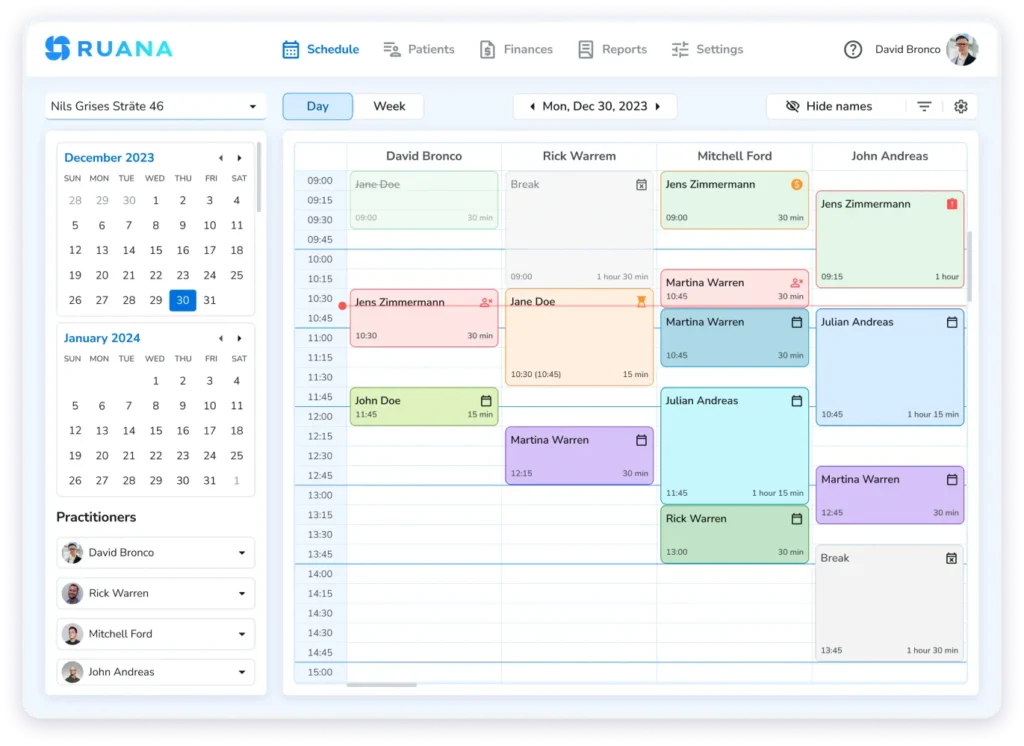
Daily appointment scheduling in Ruana practice management software.
Ruana was built with that workflow in mind. Rather than trying to manufacture positive reviews, it helps chiropractors, massage therapists, and other wellness providers create an organized patient journey that gives people something genuinely positive to write about.
Conclusion
Most patients don’t object to leaving a review. They simply need the opportunity while the experience is still fresh.
A natural request, good timing, and an easy review process are often enough to build a steady stream of honest feedback over time.
Our suggestion is to start with one review request method. Use it consistently to make it easy for patients to respond. As your review profile grows, you’ll not only strengthen your online reputation but also give future patients more confidence in choosing your practice.
FAQ: Asking for Patient and Client Reviews
Is it legal to ask patients for Google reviews?
Yes – asking patients or clients for honest reviews is entirely legal and common practice. Never offer incentives or filter for only positive reviews, as these practices can violate Google’s terms of service and, in some jurisdictions, consumer protection regulations. Always ensure you do not reveal any protected health information (PHI) in your response to reviews.
How many Google reviews does a health practice need?
There’s no magic number, but practices with 25 or more reviews tend to appear more credible to prospective patients than those with fewer than 10. More importantly, recency matters – a practice with 15 reviews from the past six months will often perform better in local search than one with 50 reviews from three years ago. Aim for a steady, ongoing trickle of fresh reviews rather than a one-time burst.
What’s the best time to send a review request?
Within 24 hours of a positive appointment is ideal. For email, mid-morning (around 10 AM) and early afternoon tend to see the highest open rates. For SMS, early afternoon on weekdays typically works well. Avoid sending review requests on weekend evenings or late at night.
Can I ask all patients for reviews, or just happy ones?
Best practice – and Google policy – is to ask consistently, not selectively. Selectively asking only happy patients (known as “review gating”) is against Google’s terms of service. In practice, the vast majority of people are satisfied with their care, so consistent asking will naturally result in a positive review profile.
What should I do if I get a bad review?
Respond calmly, professionally, and without revealing any patient-specific information. Thank the reviewer for their feedback, acknowledge their experience, and invite them to contact you directly to resolve the issue. Never argue online. A professional, non-defensive response to a negative review can actually increase trust with everyone reading your profile.
Should I ask for reviews on platforms other than Google?
Google is the highest priority for most health practices because it directly affects local search visibility and new patient discovery. Build a strong, consistent base there first. Once your Google review strategy is running on autopilot, you can evaluate whether other platforms make sense for your specific specialty and market — but for most practices, Google alone delivers the greatest return on effort.
About the Authors
★★★★★4.9 · 329 Reviews
Rouzbeh NoroozyChiropractor & Co-Founder · Palmer West · UC Berkeley · 14 Years of ExperienceRouzbeh Noroozy is a chiropractor with 14 years of clinical experience and co-founder of Ruana practice management software. He completed his undergraduate studies at the University of California, Berkeley and graduated from the renowned Palmer College of Chiropractic West in California. As a practicing clinician and clinic owner, he understands firsthand the administrative challenges practices face — and which digital tools genuinely help streamline day-to-day operations.
Anastasiia NoroozyMedical Graduate & Co-Founder · 8 Years of ExperienceAnastasiia Noroozy is a medical graduate and co-founder of Ruana with 8 years of experience working directly with patients at the clinic in Cologne. She manages the day-to-day flow of the practice and knows every patient-facing process from the inside out — from intake and scheduling to follow-up care. Her hands-on clinical and operational experience directly shapes how Ruana is built to work in the real world.
Our team will review your inquiry and get back to you as soon as possible.
Privacy Settings
To provide the best experiences, we use technologies like cookies to store and/or access device information. Consenting to these technologies will allow us to process data such as browsing behavior or unique IDs on this site. Not consenting or withdrawing consent, may adversely affect certain features and functions.
Functional
Always active
The technical storage or access is strictly necessary for the legitimate purpose of enabling the use of a specific service explicitly requested by the subscriber or user, or for the sole purpose of carrying out the transmission of a communication over an electronic communications network.
Preferences
The technical storage or access is necessary for the legitimate purpose of storing preferences that are not requested by the subscriber or user.
Analytics
The technical storage or access that is used exclusively for statistical purposes.The technical storage or access that is used exclusively for anonymous statistical purposes. Without a subpoena, voluntary compliance on the part of your Internet Service Provider, or additional records from a third party, information stored or retrieved for this purpose alone cannot usually be used to identify you.
Marketing
The technical storage or access is required to create user profiles to send advertising, or to track the user on a website or across several websites for similar marketing purposes.
To provide the best experience for our practitioners, we use cookies to personalize content, analyze our traffic, and support our marketing efforts. By clicking 'Accept', you consent to our use of these technologies. You can manage your preferences at any time.
Functional
Always active
The technical storage or access is strictly necessary for the legitimate purpose of enabling the use of a specific service explicitly requested by the subscriber or user, or for the sole purpose of carrying out the transmission of a communication over an electronic communications network.
Preferences
The technical storage or access is necessary for the legitimate purpose of storing preferences that are not requested by the subscriber or user.
Analytics
The technical storage or access that is used exclusively for statistical purposes.The technical storage or access that is used exclusively for anonymous statistical purposes. Without a subpoena, voluntary compliance on the part of your Internet Service Provider, or additional records from a third party, information stored or retrieved for this purpose alone cannot usually be used to identify you.
Marketing
The technical storage or access is required to create user profiles to send advertising, or to track the user on a website or across several websites for similar marketing purposes.