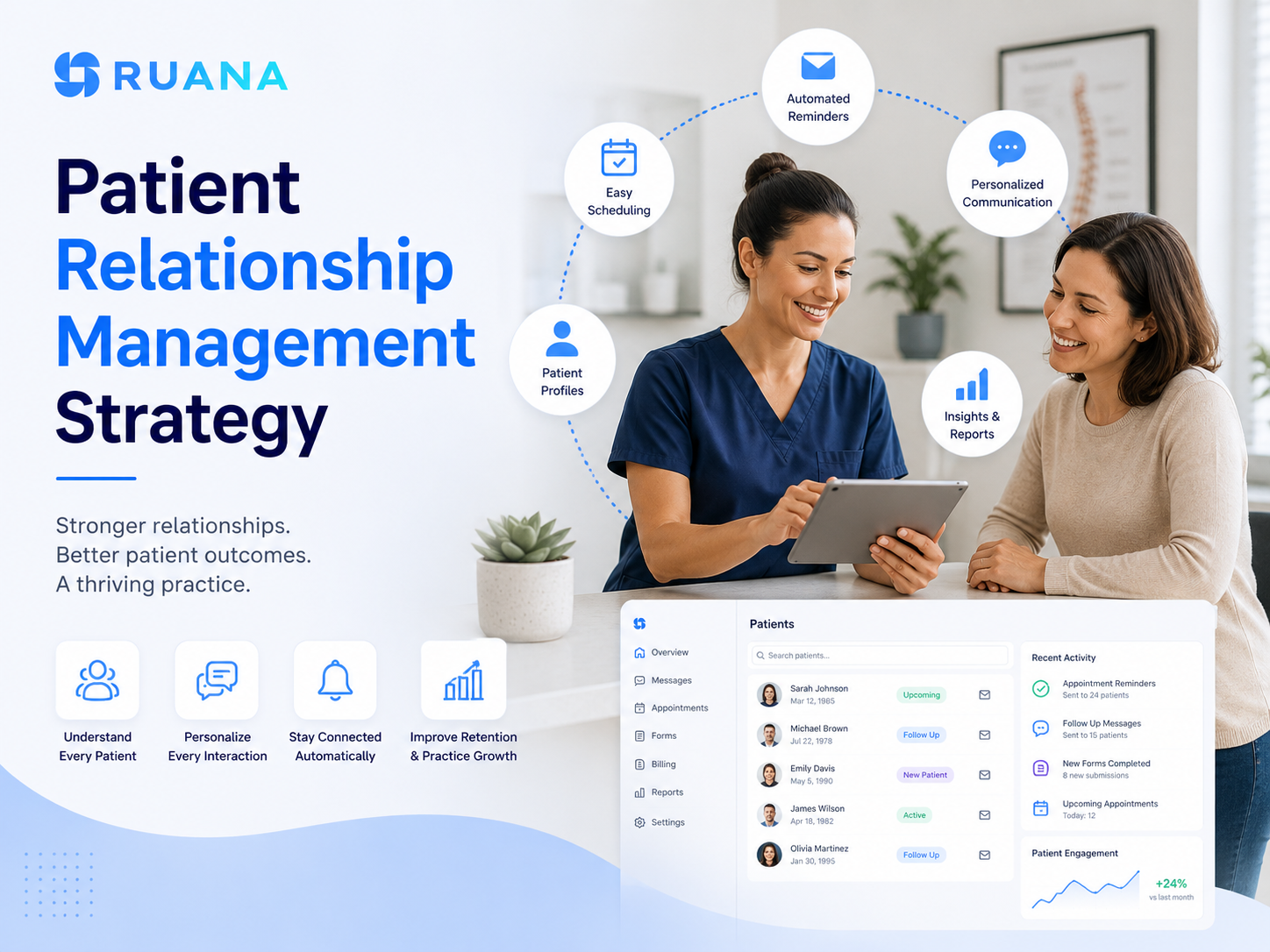
Patient Relationship Management Strategy for Long-Term Loyalty
11.07.26
Patient relationships don’t grow by chance. Learn the strategies and workflows that help wellness practices keep patients engaged long after their first visit.
As wellness providers, we shape patient relationships with every interaction, from booking and check-in to follow-up messages and ongoing care. When those touchpoints appear smooth and personal, patients are more likely to return, follow treatment plans, and recommend your practice to others.
In this guide, you’ll learn how to build a patient relationship management strategy that strengthens trust, improves retention, and creates a better experience for every patient, without adding more work to your day.
Patient relationship management is the day-to-day work of making it easy for people to stay with your practice. It starts before the first visit and keeps going long after the appointment ends, including booking, intake, communication, follow-up, documentation, and every small interaction that shapes whether a patient feels comfortable coming back.
In wellness practices, this is part of care, not a layer added on top of it. A patient does not separate treatment quality from the rest of the experience as neatly as practitioners sometimes do. They remember how easy it was to book, whether anyone seemed prepared for their visit, or if the practice was followed up on or went silent.
Why Patient Relationships Matter for Wellness Practices
Our industry depends heavily on repeat visits. Patients often come in with issues that need time, consistency, and follow-through. That could mean pain management, mobility work, stress support, rehabilitation, or regular maintenance care. A strong first session helps. A smooth ongoing experience keeps the patient coming back.
This has a direct effect on how the practice runs.
Better relationships usually mean steadier repeat bookings, fewer drop-offs between visits, and more referrals that come through trust instead of constant promotion.
A weaker patient experience creates the opposite pattern. People delay their next session, forget to rebook, or quietly move on.
Smaller practices feel this even more. They rarely have the budget to replace lost patients at scale. In this case, patient retention matters because it protects revenue and makes growth less fragile. It also makes daily operations easier. A patient who trusts the practice needs less reassurance, responds faster, and is more likely to stay engaged with care.
The 8 Building Blocks of an Effective Patient Relationship Management Strategy
1. Make Booking Effortless
Booking is the first real test of the relationship. If this step is confusing or slow, some people will disappear before they ever make it onto the schedule.
Patients want to see available times, choose what works, and move on. They do not want to call twice, wait for a reply, or guess which service to choose. Every extra step adds friction. Every unclear instruction gives them another reason to postpone the appointment.
This matters for new patients most of all. At that point, trust is still thin. A hard booking process makes the practice feel harder to deal with than it needs to be.
2. Create a Great First Impression
The first visit shapes expectations fast. Long waits, repeated paperwork, unclear instructions, and a distracted front desk all send the same message: this practice may not be as organized as it should be.
A better first impression comes from simple things done well.
Intake forms should be easy to complete.
Waiting time should stay short.
The front desk should be friendly and calm, not rushed and cold.
Patients should know what happens next without having to ask three times.
None of this is dramatic. It still matters. People decide very quickly whether a place appears easy to trust, and the first visit often sets that tone.
3. Personalize Every Visit
Patients notice when care feels generic. They also notice when a practitioner remembers what happened last time, understands their goals, and picks up the thread without making them repeat everything from the beginning.
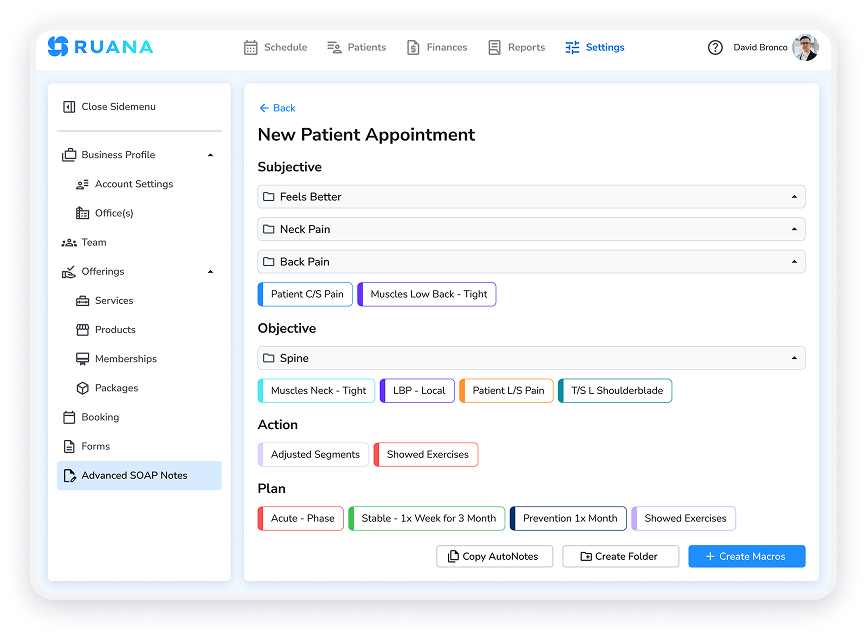
Personalization does not require a grand gesture. It comes from paying attention and keeping good records. Strong documentation and advanced SOAP notes help practitioners stay consistent from one visit to the next. It makes care more continuous rather than improvised.
Create SOAP notes with customizable buttons and automatic notes
4. Communicate Between Appointments
A lot of practices go quiet between visits. That silence creates distance fast.
Patients often need a reminder, a check-in, or a simple nudge to stay engaged. A short message after the first session, a reminder before the next appointment, or a follow-up tied to their care plan can keep the relationship active without becoming intrusive.
This is especially important when treatment depends on momentum. If the patient leaves and hears nothing for weeks, the next step starts feeling optional. Many people will let it slide.
5. Make Follow-Up Part of Your Workflow
Just like casual communication, follow-up works best when it is built into the practice, not left to memory.
Once follow-up depends on whether someone remembers to send a message, it becomes inconsistent. One patient gets contacted. Another hears nothing. The result feels uneven, and patients notice that faster than teams expect.
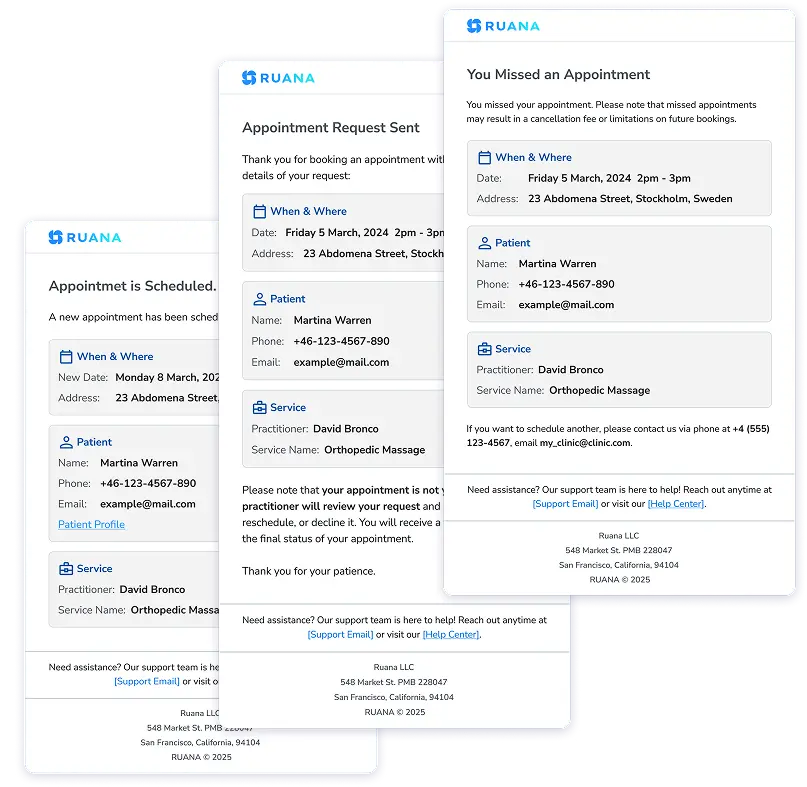
Patient email reminders for booking confirmation, reschedule requests, and cancellations.
A stronger approach is to treat follow-up as a normal part of care delivery. That could mean checking in after the first session, reaching out after a missed appointment, or prompting rebooking when a patient is due back. The goal is not constant outreach but consistency.
6. Reduce Administrative Friction
Patients lose patience with admin problems quickly. A treatment may be excellent, while the overall experience can still be frustrating because the surrounding process is clumsy.
This usually shows up in small ways.
The same form gets filled out twice.
A reschedule takes too many messages.
Payment is awkward.
A reminder never arrives.
A staff member cannot answer a simple question because the information is buried somewhere else.
Each issue looks minor on its own. Put them together, and the practice starts feeling harder to return to. That damages loyalty quietly.
7. Build Trust Through Consistency
A patient who gets a smooth, reliable experience several times in a row starts to relax. They stop wondering whether this visit will be different from the last one.
Consistency shows up everywhere. Booking works the same way each time. Notes are easy to follow. Staff knows where things stand. Communication is clear. Follow-up happens when it should. The patient does not feel like they are starting over every time they walk in.
That kind of consistency builds trust more effectively than polished branding ever will.
8. Measure and Improve
A patient relationship management strategy needs proof that it is working. Otherwise, the practice is guessing.
The most useful metrics are usually the ones closest to daily reality: retention rate, no-show rate, cancellations, repeat bookings, patient satisfaction, and referrals. These numbers show where the patient experience is holding up and where it is starting to fray.
For example, declining repeat bookings may indicate weak follow-up or an inconvenient booking process. Rising cancellations may suggest a scheduling issue, reminder problem, or low commitment to the treatment plan. Low referral rates can mean patients are satisfied enough to return but not impressed enough to recommend the practice.
Strong patient relationships rarely fall apart all at once. More often, they wear down through repeated mistakes. A missed follow-up here, a long wait there, a confusing booking step, a generic visit, an inconsistent front desk experience. Over time, patients stop feeling looked after and start feeling like they are carrying too much of the process themselves.
The table below highlights some of the most common mistakes practices make and the better direction to take instead.
Mistake
Better approach
Booking takes too long or requires too much back-and-forth
Keep booking clear, simple, and easy to complete
Intake is repetitive or disorganized
Use streamlined intake forms and a smoother check-in process
Communication drops off between visits
Stay in touch with reminders, check-ins, and relevant follow-up
Follow-up depends on memory
Build it into the workflow so it happens consistently
Patient information is scattered across tools
Keep records organized so staff and practitioners can respond quickly
Long waits and rushed reception become normal
Protect the first impression with a calmer, more efficient front desk flow
The practice never reviews patient experience data
Track key metrics regularly and adjust systems when the numbers point to friction
These mistakes do not always look serious from inside the practice. Patients experience them differently.
How Practice Management Software Supports Patient Relationship Management
Every part of the patient journey affects the relationship. Once pieces like intake forms, progress notes, or bills live in separate tools, the patient experience starts to feel uneven.
That fragmentation creates problems for staff too. People waste time switching between systems, searching for details, and filling gaps manually. Patients feel that disorganization, even when no one says it out loud.
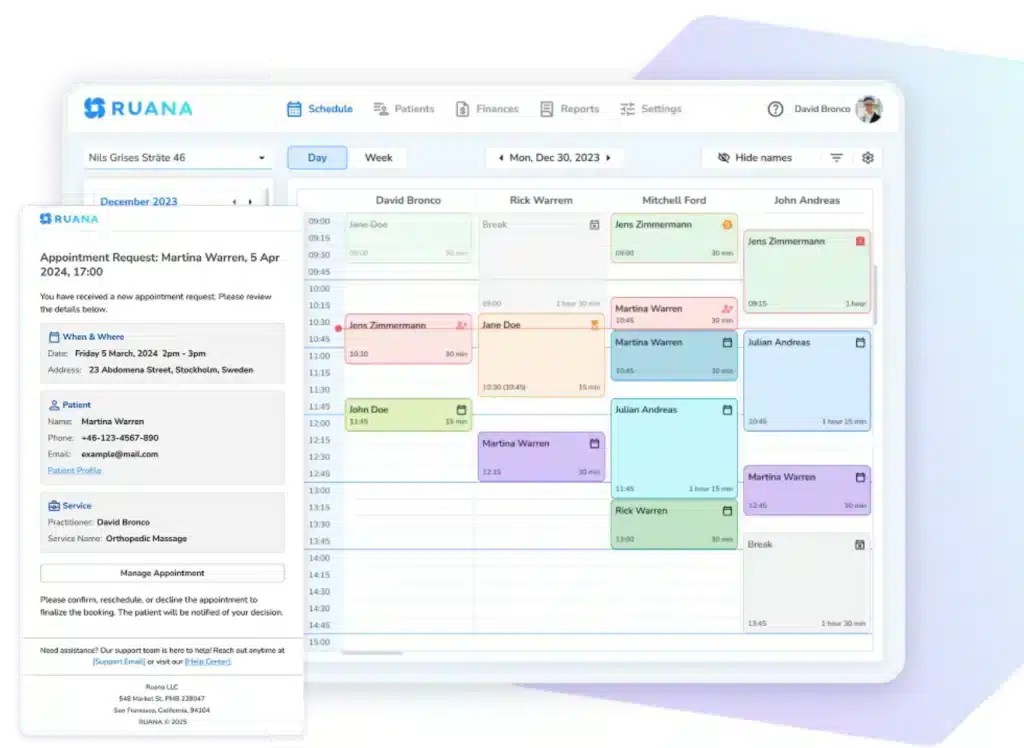
A single practice management system helps create a steadier experience from start to finish. Scheduling stays connected to intake, while patient records, reminders, and follow-up fit into the workflow instead of becoming extra tasks. Staff can answer questions faster because the information is easier to find.
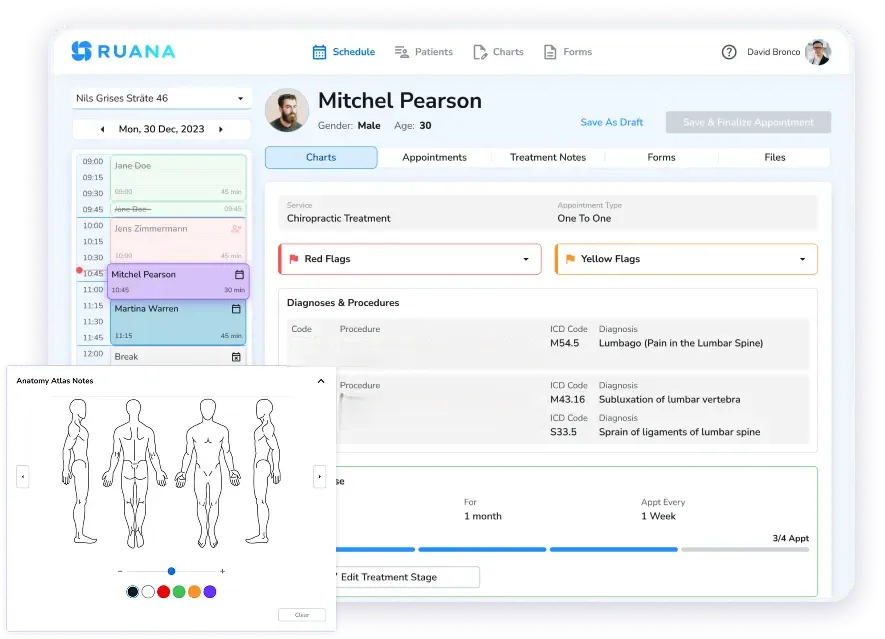
Practitioner mode screen with patient profile, diagnoses, and clinical charting.
For wellness practices, that kind of setup matters because loyalty is tied closely to consistency. When the practice works as one system, the patient experience becomes smoother and more dependable.
Conclusion
Building strong patient relationships takes more than good intentions. It requires systems that help every interaction feel organized, personal, and consistent, from the first booking to long-term follow-up.
That’s exactly what Ruana was built for.
Designed by practitioners who experienced these challenges firsthand, Ruana brings scheduling, digital intake forms, SOAP notes, patient records, billing, reminders, and reporting into one intuitive platform. With fewer administrative tasks and a smoother workflow, your team can spend less time managing software and more time building the relationships that keep patients coming back.
About the Authors
★★★★★4.9 · 329 Reviews
Rouzbeh NoroozyChiropractor & Co-Founder · Palmer West · UC Berkeley · 14 Years of ExperienceRouzbeh Noroozy is a chiropractor with 14 years of clinical experience and co-founder of Ruana practice management software. He completed his undergraduate studies at the University of California, Berkeley and graduated from the renowned Palmer College of Chiropractic West in California. As a practicing clinician and clinic owner, he understands firsthand the administrative challenges practices face — and which digital tools genuinely help streamline day-to-day operations.
Anastasiia NoroozyMedical Graduate & Co-Founder · 8 Years of ExperienceAnastasiia Noroozy is a medical graduate and co-founder of Ruana with 8 years of experience working directly with patients at the clinic in Cologne. She manages the day-to-day flow of the practice and knows every patient-facing process from the inside out — from intake and scheduling to follow-up care. Her hands-on clinical and operational experience directly shapes how Ruana is built to work in the real world.
Our team will review your inquiry and get back to you as soon as possible.
Privacy Settings
To provide the best experiences, we use technologies like cookies to store and/or access device information. Consenting to these technologies will allow us to process data such as browsing behavior or unique IDs on this site. Not consenting or withdrawing consent, may adversely affect certain features and functions.
Functional
Always active
The technical storage or access is strictly necessary for the legitimate purpose of enabling the use of a specific service explicitly requested by the subscriber or user, or for the sole purpose of carrying out the transmission of a communication over an electronic communications network.
Preferences
The technical storage or access is necessary for the legitimate purpose of storing preferences that are not requested by the subscriber or user.
Analytics
The technical storage or access that is used exclusively for statistical purposes.The technical storage or access that is used exclusively for anonymous statistical purposes. Without a subpoena, voluntary compliance on the part of your Internet Service Provider, or additional records from a third party, information stored or retrieved for this purpose alone cannot usually be used to identify you.
Marketing
The technical storage or access is required to create user profiles to send advertising, or to track the user on a website or across several websites for similar marketing purposes.
To provide the best experience for our practitioners, we use cookies to personalize content, analyze our traffic, and support our marketing efforts. By clicking 'Accept', you consent to our use of these technologies. You can manage your preferences at any time.
Functional
Always active
The technical storage or access is strictly necessary for the legitimate purpose of enabling the use of a specific service explicitly requested by the subscriber or user, or for the sole purpose of carrying out the transmission of a communication over an electronic communications network.
Preferences
The technical storage or access is necessary for the legitimate purpose of storing preferences that are not requested by the subscriber or user.
Analytics
The technical storage or access that is used exclusively for statistical purposes.The technical storage or access that is used exclusively for anonymous statistical purposes. Without a subpoena, voluntary compliance on the part of your Internet Service Provider, or additional records from a third party, information stored or retrieved for this purpose alone cannot usually be used to identify you.
Marketing
The technical storage or access is required to create user profiles to send advertising, or to track the user on a website or across several websites for similar marketing purposes.