How to Reduce No-Shows in Your Wellness Practice: 8 Practical Strategies
18.06.26
No-shows are not just empty spots on the calendar. For a wellness practice, they can mean lost revenue, wasted preparation time, awkward gaps in the day, and delayed care for clients who could have used that appointment.
The frustrating part is that many missed appointments are preventable, which is why learning how to reduce no-shows starts with understanding why they happen. Clients may forget, book too far in advance, feel unsure about cancellation rules, or have no easy way to reschedule when something comes up.
In this guide, we’ve packed 8 practical ways to reduce patient no-shows in your wellness practice without making the client experience feel strict, cold, or complicated.
A no-show usually means a client or patient does not arrive for a scheduled appointment and does not give notice in advance.
However, in our industry, it’s better to separate missed appointments into several clear categories, because not every problem has the same causes and solutions.
The most common types include:
True no-show: The client does not attend and gives no warning.
Late cancellation: The client cancels too close to the appointment time for the practice to fill the slot.
Same-day reschedule: The client moves the appointment on short notice, but the original time remains empty.
Forgotten or avoidable no-show: The client may have forgotten the visit or felt confused about the time, location, cost, paperwork, or cancellation rules.
“In our own clinic, we have dealt with every type of missed appointment. What we learned is that these situations may look the same on the calendar, but they do not have the same cause. This distinction matters because each problem needs a different fix.” – Anastasiia Noroozy, Medical Graduate & Co-Founder of Ruana
Why No-Shows Hurt Small Wellness Practices
A day of a small wellness practitioner may be built around one-on-one sessions, limited treatment rooms, and a small team juggling the administrative work.
There are multiple ways a missed appointment can hurt the practice, with some of the most common ones:
Lost revenue = The practice loses income from the missed visit, especially if the slot cannot be filled at the last minute.
Wasted preparation time = Staff may have already reviewed records, prepared the room, or planned the session before realising the client is not coming.
Awkward gaps in the schedule = Empty slots can break the flow of the day and leave practitioners waiting between appointments.
Delayed care for other clients = A missed appointment could have gone to someone on the waitlist or a client who needed an earlier visit.
More admin work = Staff may need to follow up, reschedule, apply the policy, update records, or chase confirmations for future appointments.
These small issues can quickly pile up and result in bigger disruptions over time. Therefore, reducing the no-shows is not always about protecting the revenue, but also making the experience smoother for everyone involved.
How to Calculate Your No-Show Rate
What’s your average no-show rate? Before trying to change your inner workflows, check if it’s really worth it. Otherwise, it is easy to assume the problem is “bad lately” without knowing whether missed appointments are increasing, improving, or only happening in certain parts of the schedule.
Use this formula to calculate the patient no-show rate:
For example, if your practice had 15 missed appointments out of 300 scheduled appointments last month, the calculation would look like this:
15 ÷ 300 × 100 = 5% no-show rate
The 5% is your starting point. Although it’s not alarming yet, it can still represent meaningful lost revenue and wasted time for a small practice. For example, if the average appointment is worth $85, 15 missed appointments in a month equals $1,275 in lost revenue before counting staff time, unused room capacity, or clients who could have taken those slots.
💡At this point, the goal is not necessarily to change everything. Instead, look for patterns. If most no-shows happen among first-time clients, then you may need stronger confirmation messages or digital intake forms before the visit. If they happen on certain days or appointment types, reminder timing or scheduling rules may need a review.
How to Reduce No-Shows: 8 Tips for Your Wellness Practice
Once you know how many appointments are being missed and where the patterns are coming from, the next step is to improve the parts of your workflow that affect attendance.
Below, we’ve collected some of the most practical and effective strategies to help you reduce patient no-shows without making the client experience feel strict or complicated.
1. Create a Clear No-Show and Cancellation Policy
A clear cancellation policy sets expectations before the appointment is ever missed. It tells clients what counts as a late cancellation, how much notice they need to give, and what happens if they do not show up.
You don’t have to sound harsh. It’s all for the sake of protecting the schedule and creating a fair and simple way to cancel or reschedule the appointment.
A simple policy may look like this:
“We ask for at least 24 hours’ notice if you need to cancel or reschedule your appointment. Missed appointments or cancellations made with less than 24 hours’ notice may be subject to a cancellation fee. We understand emergencies happen, so please contact us as soon as possible if something unexpected comes up.”
The policy should not be buried in one place. Add it to the booking page, appointment confirmation, intake form, and reminder messages. This way, clients see the expectation before the visit, not only after they miss it.
The Financial Impact of Clear Policies
Research demonstrates that financial incentives significantly improve patient attendance rates. Studies show a 64% uptake in prepayment discounts, proving that tying attendance to financial commitments enhances follow-through. Implementing a reasonable no-show fee, typically ranging from $25-$75 for wellness practices, with $50 being the sweet spot, encourages patients to either attend their appointments or provide adequate notice for cancellations.
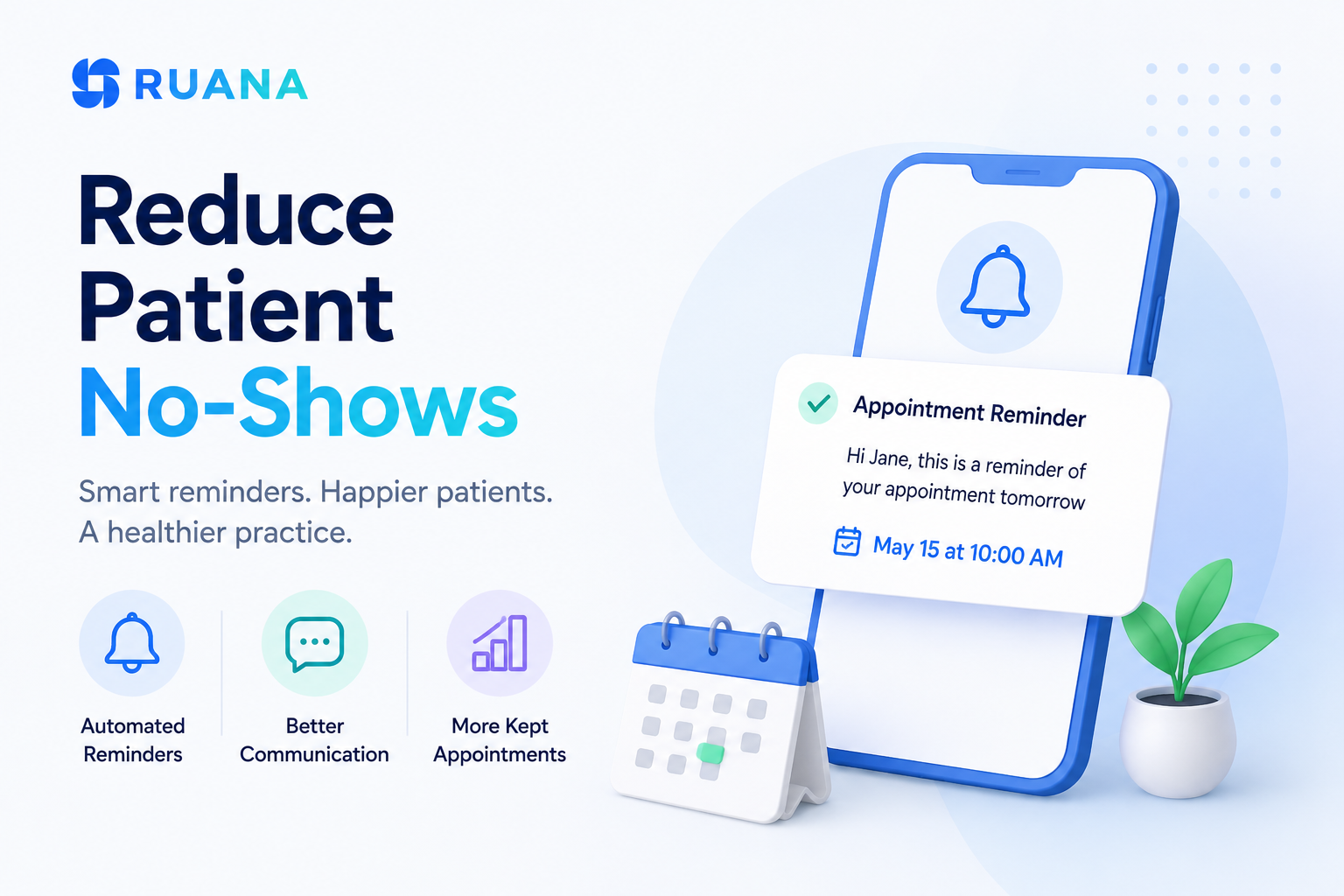
2. Send Automated Appointment Reminders
Sending appointment reminders is probably the simplest way to reduce missed visits, especially if they are booked days or weeks in advance.
People forget. They misread the time. They assume the appointment is next week.
Reminders won’t fix every no-show, but they can remove some of the most common reasons why clients miss appointments.
The best reminder workflow usually includes the following messages:
Booking confirmation: Sent immediately after the appointment is scheduled.
Advance reminder: Sent 48 hours before the visit with the date, time, location, and rescheduling instructions.
Final reminder: Sent 24 hours before the appointment, or a few hours before when appropriate.
Follow-up message: Sent after a missed appointment to check in and offer a way to reschedule.
Keep a short, clear, and useful structure. Avoid having fluff and too many details.
For example ⤵️
Reminder: You have an appointment with [Practice Name] on [Date] at [Time]. Please contact us as soon as possible if you need to cancel or reschedule.
3. Make Rescheduling Easy
There might be cases when clients miss appointments because rescheduling feels inconvenient, awkward, or too late to handle properly. That is why every reminder should make the next step clear. If a client cannot attend, they should know exactly how to cancel or reschedule before the appointment turns into a no-show.
A simple rescheduling process should include:
Clear instructions: Tell clients how to cancel or reschedule in the confirmation and reminder messages.
Enough notice: Remind them of the cancellation window before it is too late.
Simple contact options: Make it easy to call, message, or use the booking system to request a new time.
Consistent follow-up: If someone misses an appointment, reach out politely and offer a way to rebook.
For example, a reminder message can say:
If you need to cancel or reschedule, please contact us at least 24 hours before your appointment so we can offer the time to another client.
Practitioners using Ruana can keep appointments, client details, and follow-up notes in one place. This makes it easier for the front desk team to see what happened, contact the client, and help them pick a new time.
4. Use Online Booking to Reduce Confusion
Online booking and scheduling for chiropractors, massage therapists, and wellness practices helps significantly reduce no-shows because it gives clients more control over the appointment from the beginning. No one likes calling and trying to sync free time slots over the phone, when they can do that online with just a few clicks.
It also reduces small scheduling mistakes that often lead to missed appointments, such as misunderstood times, unclear service details, or forgotten booking information.
Online booking works best when it gives clients:
Available time slots, so they can choose a time that works for them.
Instant confirmation, so they know the appointment was booked successfully.
Clear appointment details: Including date, time, service, provider, location, and preparation notes.
Easy access outside office hours: So clients can book without waiting for a callback.
Clear booking and scheduling makes the appointment feel more organized, thus reducing the chances of confusion before the visit. This is especially important for first-time clients who are looking for a stress-free and convenient experience.
Ruana supports online booking and scheduling for chiropractors, massage therapists, and wellness practices, helping clients book appointments while the practice keeps the schedule organized on the back end. When booking, reminders, intake forms, and client records are connected, there is less room for missed details and last-minute confusion.
5. Collect Digital Intake Forms Before the Visit
When a patient completes a form, shares their details, and explains why they are booking the visit, the appointment becomes more concrete. It is no longer just a time slot on the calendar.
Digital intake forms can make the visit easier to prepare for, because you receive the client details before the visit and have time to prepare to make the experience more customized.
For instance, Ruana’s digital intake form creator helps practitioners keep the collected information connected with the rest of the appointment workflow. This is a direct path to:
Improving preparation: As said earlier, you can review the information before the session.
Saving front desk time: Staff spend less time handling paperwork when the client arrives.
Reducing first-visit confusion: Forms can collect contact details, health history, consent, and visit reasons in advance.
Creating early commitment: Clients take an active step before the appointment.
Some missed visits happen randomly, but others follow patterns. Once you manage to identify which patient no-shows follow a specific pattern, you’ll be able to take extra steps before the appointment is missed.
Here are some of the high-risk appointments:
First-time clients who have not yet built a relationship with the practice.
Appointments booked far in advance because they are easier to forget.
Clients with previous no-shows or late cancellations who may need clearer reminders or policy reinforcement.
Certain days, times, services, or locations where missed appointments happen more often.
Practitioners who prefer keeping all the flow in dedicated practice management software can easily access appointment history, client details, and scheduling details.
7. Follow Up After Missed Appointments
A missed appointment doesn’t always mean the end of the client relationship. In many cases, a polite follow-up can help the client reschedule, explain what happened, and understand the practice’s policy for next time.
Keep the message short and calm:
We missed you today and hope everything is okay. Please contact us if you would like to reschedule. As a reminder, missed appointments may be subject to our cancellation policy.
After the follow-up, update the client record so the team can see what happened. If the same client misses appointments repeatedly, the practice may need to confirm future visits more directly or apply the cancellation policy more consistently.
8. Track No-Show Data Every Month
Review missed appointments every month to see where the problem is coming from. Our suggestion is to track details such as:
Overall no-show rate
Late cancellations and same-day reschedules
First-time vs returning clients
Practitioner, service, location, day, and time
Repeat no-show clients
This makes it easier to choose the right fix. If first-time clients miss more often, improve confirmation messages and intake forms. If one time slot has more no-shows, adjust reminder timing. If repeat clients are the issue, review your policy and follow-up process.
Appointment Reminder Templates You Can Use
Here are a few simple appointment reminder templates you can adjust for your practice.
Booking confirmation
Hi [Client Name], your appointment with [Practice Name] is confirmed for [Date] at [Time].
Location: [Address]
Please contact us at [Phone Number] if you need to cancel or reschedule.
24-hour appointment reminder
Hi [Client Name], this is a reminder of your appointment with [Practice Name] tomorrow at [Time].
If you need to cancel or reschedule, please contact us at least [Cancellation Window] in advance.
Missed appointment follow-up
Hi [Client Name], we missed you today and hope everything is okay.
Please contact us at [Phone Number] if you would like to reschedule. As a reminder, missed appointments may be subject to our cancellation policy.
Final Thoughts
Reducing no-shows is not about making your practice stricter. It is about making appointments easier to remember, easier to manage, and easier to reschedule when plans change.
With clear policies, automated reminders, digital intake forms, and better visibility into appointment patterns, wellness practices can protect their schedule without creating a cold client experience. Ruana helps connect these steps in one practice management workflow, so fewer appointments fall through the cracks.
About the Authors
★★★★★4.9 · 329 Reviews
Rouzbeh NoroozyChiropractor & Co-Founder · Palmer West · UC Berkeley · 14 Years of ExperienceRouzbeh Noroozy is a chiropractor with 14 years of clinical experience and co-founder of Ruana practice management software. He completed his undergraduate studies at the University of California, Berkeley and graduated from the renowned Palmer College of Chiropractic West in California. As a practicing clinician and clinic owner, he understands firsthand the administrative challenges practices face — and which digital tools genuinely help streamline day-to-day operations.
Anastasiia NoroozyMedical Graduate & Co-Founder · 8 Years of ExperienceAnastasiia Noroozy is a medical graduate and co-founder of Ruana with 8 years of experience working directly with patients at the clinic in Cologne. She manages the day-to-day flow of the practice and knows every patient-facing process from the inside out — from intake and scheduling to follow-up care. Her hands-on clinical and operational experience directly shapes how Ruana is built to work in the real world.
Our team will review your inquiry and get back to you as soon as possible.
Privacy Settings
To provide the best experiences, we use technologies like cookies to store and/or access device information. Consenting to these technologies will allow us to process data such as browsing behavior or unique IDs on this site. Not consenting or withdrawing consent, may adversely affect certain features and functions.
Functional
Always active
The technical storage or access is strictly necessary for the legitimate purpose of enabling the use of a specific service explicitly requested by the subscriber or user, or for the sole purpose of carrying out the transmission of a communication over an electronic communications network.
Preferences
The technical storage or access is necessary for the legitimate purpose of storing preferences that are not requested by the subscriber or user.
Analytics
The technical storage or access that is used exclusively for statistical purposes.The technical storage or access that is used exclusively for anonymous statistical purposes. Without a subpoena, voluntary compliance on the part of your Internet Service Provider, or additional records from a third party, information stored or retrieved for this purpose alone cannot usually be used to identify you.
Marketing
The technical storage or access is required to create user profiles to send advertising, or to track the user on a website or across several websites for similar marketing purposes.
To provide the best experience for our practitioners, we use cookies to personalize content, analyze our traffic, and support our marketing efforts. By clicking 'Accept', you consent to our use of these technologies. You can manage your preferences at any time.
Functional
Always active
The technical storage or access is strictly necessary for the legitimate purpose of enabling the use of a specific service explicitly requested by the subscriber or user, or for the sole purpose of carrying out the transmission of a communication over an electronic communications network.
Preferences
The technical storage or access is necessary for the legitimate purpose of storing preferences that are not requested by the subscriber or user.
Analytics
The technical storage or access that is used exclusively for statistical purposes.The technical storage or access that is used exclusively for anonymous statistical purposes. Without a subpoena, voluntary compliance on the part of your Internet Service Provider, or additional records from a third party, information stored or retrieved for this purpose alone cannot usually be used to identify you.
Marketing
The technical storage or access is required to create user profiles to send advertising, or to track the user on a website or across several websites for similar marketing purposes.