How to Deal With Difficult Patients: 6 Scenarios and Scripts
31.07.26
Difficult patients are a reality in every health and wellness practice. From chronic no-shows and billing disputes to boundary issues and angry consultations — learn how to handle each situation professionally, and how better practice systems prevent many conflicts before they start.
Every healthcare practice experiences challenging patient interactions. A patient may arrive frustrated after living with pain for months, become upset about an unexpected bill, question a treatment recommendation, or react emotionally after receiving difficult news. Such situations are part of clinical practice, regardless of specialty or years of experience.
The goal isn’t to “win” the conversation or avoid every disagreement. It’s to respond calmly, communicate clearly, protect your team when necessary, and help move the interaction toward a productive outcome. At the same time, professionalism does not mean accepting abusive or threatening behavior. Setting appropriate boundaries is part of providing safe care for both patients and staff.
In this guide, you’ll learn how to deal with difficult patients and ways to reduce conflict before it ever begins.
Quick Answer: How Should You Handle a Difficult Patient?
When dealing with a difficult patient, try pausing before responding.
Listen without interrupting, acknowledge the patient’s concerns, clarify the facts, and explain the next steps calmly. Offer realistic options where possible, set clear boundaries if behavior becomes inappropriate, document the interaction objectively, and follow up when needed.
Most challenging situations become easier to manage when expectations are clear, and communication remains respectful.
What Makes a Patient Encounter Difficult?
It is tempting to describe someone as a “difficult patient,” but that label often oversimplifies what happened.
The American Academy of Family Physicians (AAFP) recommends examining the entire encounter rather than assuming the patient alone caused the conflict. Their guidance on Managing Difficult Patient Encounters explains that communication style, practitioner behavior, clinic systems, and the patient’s personal circumstances can all contribute to tension.
Looking at the whole interaction helps practitioners solve underlying problems instead of simply reacting to visible behavior.
Patient Factors
Patients rarely arrive frustrated without a reason.
Pain, fear, uncertainty, financial concerns, previous negative healthcare experiences, or unrealistic expectations can all influence how someone communicates during an appointment.
For example, a patient living with chronic pain may appear impatient because they have already tried several treatments without success. Another patient may become emotional after worrying about the cost of ongoing care. Others simply misunderstand what treatment can realistically achieve.
Recognizing these factors does not excuse disrespectful behavior, but it often explains why emotions are running high and helps guide a more effective response.
Practice and System Factors
Not every difficult encounter begins in the treatment room.
Long wait times, scheduling errors, incomplete intake information, confusing invoices, delayed referrals, or unclear cancellation policies can all create tension before the practitioner even enters the room.
Patients usually experience your practice as one continuous journey rather than a series of separate departments. A problem at reception can influence the clinical conversation that follows.
When reviewing a difficult patient encounter, consider whether any part of the practice’s workflow contributed to the situation. Improving systems often prevents the same issue from happening again.
How to Deal With Difficult Patients in Six Steps
Every situation is different, but most challenging interactions can be managed using the same structured approach. Rather than reacting emotionally, move through the conversation one step at a time. This helps keep the discussion focused while reducing the chance of escalation.
1. Pause and Assess the Situation
Before responding, take a moment to assess what is happening.
Ask yourself:
Is anyone’s safety at risk?
Is the patient frustrated, anxious, or simply confused?
Does the situation require immediate intervention?
Would moving the conversation to a private area help?
Your tone during the first few seconds often influences the rest of the interaction. Speaking slowly, maintaining neutral body language, and avoiding defensive reactions can prevent emotions from escalating further.
If a patient becomes aggressive or threatening, protecting staff and other patients should become the immediate priority.
2. Let the Patient Explain the Problem
People often become less confrontational once they feel heard.
Allow the patient to explain their concern without interrupting. Resist the urge to immediately defend yourself, correct details, or offer solutions before fully understanding the issue.
Simple prompts can encourage the conversation:
“Can you tell me what happened?”
“I’d like to understand what’s concerning you.”
“Help me understand what you’re experiencing.”
Listening carefully also gives you valuable information that may influence your response later.
3. Acknowledge the Emotion and Clarify the Facts
Acknowledging someone’s emotions does not mean agreeing with everything they say. Instead, recognize how they feel while separating emotions from the facts of the situation.
For example:
“I can understand why this has been frustrating.”
or
“I can see that you’re upset, and I’d like to work through this with you.”
Once emotions begin to settle, clarify the facts by asking questions, reviewing documentation, or confirming what actually occurred.
4. Set the Agenda and Any Necessary Boundaries
Once everyone understands the issue, explain what can realistically happen next. Patients generally respond better when they know what to expect.
For example:
“Let’s look at what we can resolve today, and then we’ll discuss the next steps.”
If the conversation becomes disrespectful, establish clear boundaries without becoming confrontational.
You might say:
“I want to help resolve this with you, but I can’t continue the conversation if we’re shouting at one another.”
or
“I’m happy to continue once we’re able to speak respectfully.”
Empathy and professional boundaries can exist together.
5. Offer Realistic Options
Whenever possible, provide choices rather than ultimatums.
Depending on the situation, this might include:
Reviewing treatment alternatives,
Rescheduling an appointment,
Arranging a follow-up discussion,
Explaining payment options,
Providing additional educational resources.
Avoid promising specific outcomes or guaranteeing treatment success. Instead, focus on what can realistically be done based on the patient’s circumstances and clinical judgment.
Patients often feel more in control when they participate in the decision-making process.
6. Document and Follow Up
Every significant patient interaction should be documented objectively.
Record:
The patient’s stated concerns,
Observable behavior,
Information provided,
Options discussed,
Agreed next steps,
And any boundaries communicated during the conversation.
Avoid emotionally charged language or personal opinions.
Objective documentation protects both the patient and the practice while providing useful context if similar situations arise in the future.
If follow-up is appropriate, contact the patient after the encounter to answer remaining questions, confirm next steps, or check whether the issue has been resolved. A brief follow-up conversation can often rebuild trust after an otherwise challenging interaction.
No two difficult patient encounters are exactly alike, but many follow familiar patterns. Knowing how to deal with difficult patients in advance helps practitioners respond consistently instead of reacting emotionally.
The examples below use the same framework: the situation, what may be driving it, how to respond, what to document, and how to reduce the chance of the same issue happening again.
1. A Confrontational or Angry Patient
A patient raises their voice, argues with staff, or becomes visibly upset during an appointment.
What may be driving it
The patient may be experiencing severe pain, fear about their condition, stress outside the clinic, long wait times, or unmet expectations.
How to respond
Stay calm and avoid matching the patient’s emotional tone.
Try saying:
“I can see you’re frustrated, and I’d like to understand what happened so we can work through it together.”
If the conversation escalates, move it to a private area if appropriate. If abusive language or threatening behavior continues, calmly explain that respectful communication is required before the discussion can continue.
What to document
What happened objectively
The patient’s concerns
Your response
Any boundaries that were communicated
The agreed next steps
How to prevent recurrence
Review whether communication, scheduling delays, or expectation setting contributed to the situation. If appropriate, contact the patient after the appointment to follow up.
2. A Patient Disputes a Fee or Invoice
A patient questions charges or believes they were billed incorrectly.
What may be driving it
Unexpected costs, misunderstanding of pricing, insurance confusion, or poor communication before treatment.
How to respond
Remain factual.
You might say:
“Let’s review the invoice together so we can see exactly where the confusion is.”
Avoid becoming defensive or assuming the patient is intentionally arguing. If an error occurred, acknowledge it and explain how it will be corrected.
What to document
The patient’s concern
Billing explanation provided
Any corrections made
Follow-up actions
How to prevent recurrence
Provide pricing information before treatment whenever possible and make financial policies easy to understand.
3. A Patient Does Not Follow the Recommended Plan
The patient repeatedly ignores home exercises, follow-up appointments, or other recommendations.
What may be driving it
Time constraints, financial limitations, misunderstanding instructions, fear, or low confidence that treatment will help.
How to respond
Approach the conversation with curiosity instead of frustration.
For example:
“Can you tell me what made it difficult to follow the plan?”
Understanding the barrier allows you to adjust recommendations where appropriate.
What to document
Recommendations provided
Patient’s explanation
Updated care plan
Education discussed
How to prevent recurrence
Give clear written instructions, explain why each recommendation matters, and confirm the patient understands before the appointment ends.
4. A Patient Expects Immediate or Guaranteed Results
The patient expects complete recovery after one or two appointments or becomes disappointed when progress is slower than expected.
What may be driving it
Misunderstanding of the condition, online information, previous experiences, or unrealistic expectations.
How to respond
Set expectations honestly.
For example:
“I understand you’d like faster improvement. While many patients notice progress at different rates, I can’t guarantee a specific outcome. Let’s review what we’ve achieved so far and discuss the next steps.”
What to document
Expectations discussed
Clinical education provided
Updated treatment goals
How to prevent recurrence
Discuss expected recovery timelines during the initial consultation rather than waiting until concerns arise.
5. A Patient Crosses Professional Boundaries
A patient repeatedly sends personal messages outside business hours, behaves inappropriately toward staff, or ignores established professional boundaries.
What may be driving it
Misunderstanding the practitioner-patient relationship, loneliness, dependency, or unclear clinic policies.
How to respond
Remain polite while reinforcing expectations.
For example:
“I’m happy to answer clinical questions during office hours. For urgent concerns, here’s the appropriate way to contact the clinic.”
If behavior becomes inappropriate, communicate boundaries clearly and consistently.
What to document
The behavior observed
Boundaries explained
Patient response
Any further action taken
How to prevent recurrence
Clearly explain communication channels, response times, and clinic policies during the onboarding process.
How Practice Systems Prevent Patient Conflict
Many difficult patient encounters begin long before the practitioner enters the treatment room. Clear systems reduce confusion, improve communication, and prevent many common frustrations.
Before the Appointment
Set expectations early.
Online booking, digital intake forms, appointment confirmations, pricing information, cancellation policies, and pre-visit instructions help patients understand what to expect before they arrive.
During the Visit
Review patient history before entering the room, explain recommendations clearly, answer questions, and document care while details are still fresh. Patients are less likely to become frustrated when they feel informed throughout the visit.
After the Visit
The patient experience continues after checkout.
Follow-up instructions, appointment reminders, invoices, and simple ways to schedule the next visit all contribute to a smoother experience and reduce unnecessary misunderstandings.
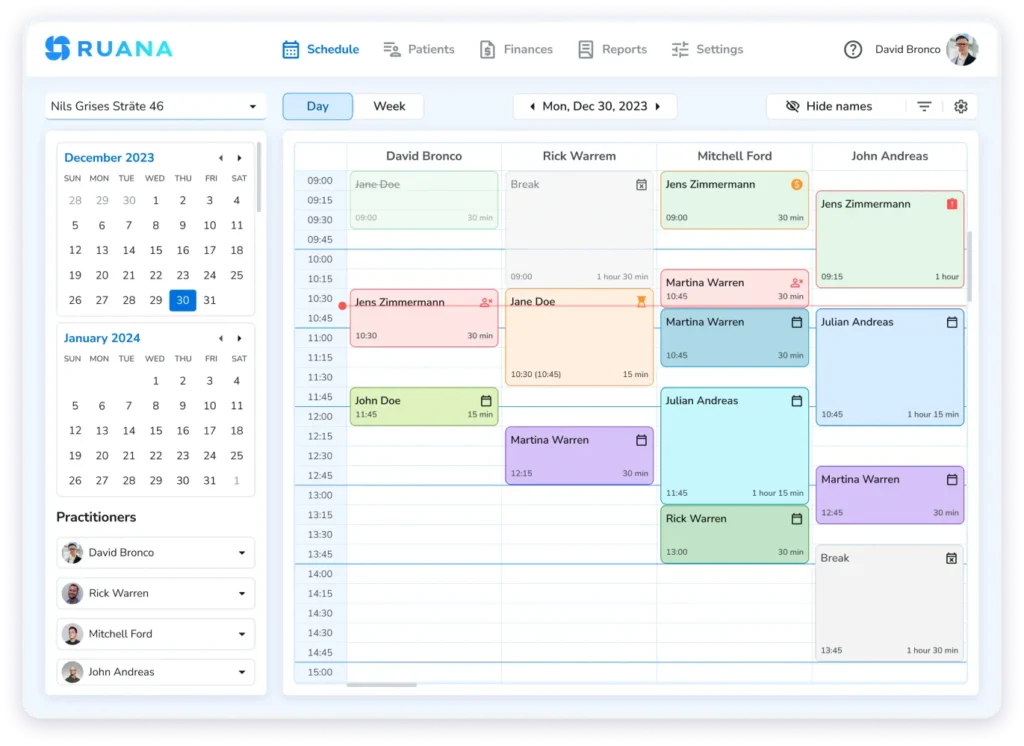
Using a connected practice management system can help standardize these touchpoints. With scheduling, digital intake forms, SOAP notes, patient records, reminders, and reporting working together, platforms like Ruana help practitioners spend less time managing administrative tasks and more time communicating with patients.
When to End the Patient-Practitioner Relationship
Most difficult patient encounters can be resolved through communication, empathy, and clear expectations. Occasionally, however, continuing the relationship is no longer appropriate.
Ending the professional relationship may be necessary when a patient:
Repeatedly directs verbal abuse toward practitioners or staff.
Makes threats or behaves violently.
Refuses to follow clinically necessary conditions required for safe care.
Engages in discriminatory or harassing behavior.
Creates ongoing conflicts that prevent safe or effective treatment despite repeated attempts to resolve them.
Whenever possible, termination should follow applicable professional standards and legal requirements. Document the reasons objectively, communicate the decision respectfully, and provide appropriate continuity-of-care information when required.
Conclusion
Every healthcare practice should know how to deal with difficult patients. While you can’t eliminate every disagreement, you can prepare for them.
Many conflicts begin with unclear expectations rather than difficult personalities. When appointment scheduling, intake forms, documentation, reminders, and follow-up are organized through consistent practice systems, patients experience fewer surprises and practitioners spend less time managing avoidable problems.
Over time, those small operational improvements create smoother appointments, stronger relationships, and a better experience for both patients and your team.
About the Authors
★★★★★4.9 · 329 Reviews
Rouzbeh NoroozyChiropractor & Co-Founder · Palmer West · UC Berkeley · 14 Years of ExperienceRouzbeh Noroozy is a chiropractor with 14 years of clinical experience and co-founder of Ruana practice management software. He completed his undergraduate studies at the University of California, Berkeley and graduated from the renowned Palmer College of Chiropractic West in California. As a practicing clinician and clinic owner, he understands firsthand the administrative challenges practices face — and which digital tools genuinely help streamline day-to-day operations.
Anastasiia NoroozyMedical Graduate & Co-Founder · 8 Years of ExperienceAnastasiia Noroozy is a medical graduate and co-founder of Ruana with 8 years of experience working directly with patients at the clinic in Cologne. She manages the day-to-day flow of the practice and knows every patient-facing process from the inside out — from intake and scheduling to follow-up care. Her hands-on clinical and operational experience directly shapes how Ruana is built to work in the real world.
Our team will review your inquiry and get back to you as soon as possible.
Privacy Settings
To provide the best experiences, we use technologies like cookies to store and/or access device information. Consenting to these technologies will allow us to process data such as browsing behavior or unique IDs on this site. Not consenting or withdrawing consent, may adversely affect certain features and functions.
Functional
Always active
The technical storage or access is strictly necessary for the legitimate purpose of enabling the use of a specific service explicitly requested by the subscriber or user, or for the sole purpose of carrying out the transmission of a communication over an electronic communications network.
Preferences
The technical storage or access is necessary for the legitimate purpose of storing preferences that are not requested by the subscriber or user.
Analytics
The technical storage or access that is used exclusively for statistical purposes.The technical storage or access that is used exclusively for anonymous statistical purposes. Without a subpoena, voluntary compliance on the part of your Internet Service Provider, or additional records from a third party, information stored or retrieved for this purpose alone cannot usually be used to identify you.
Marketing
The technical storage or access is required to create user profiles to send advertising, or to track the user on a website or across several websites for similar marketing purposes.
To provide the best experience for our practitioners, we use cookies to personalize content, analyze our traffic, and support our marketing efforts. By clicking 'Accept', you consent to our use of these technologies. You can manage your preferences at any time.
Functional
Always active
The technical storage or access is strictly necessary for the legitimate purpose of enabling the use of a specific service explicitly requested by the subscriber or user, or for the sole purpose of carrying out the transmission of a communication over an electronic communications network.
Preferences
The technical storage or access is necessary for the legitimate purpose of storing preferences that are not requested by the subscriber or user.
Analytics
The technical storage or access that is used exclusively for statistical purposes.The technical storage or access that is used exclusively for anonymous statistical purposes. Without a subpoena, voluntary compliance on the part of your Internet Service Provider, or additional records from a third party, information stored or retrieved for this purpose alone cannot usually be used to identify you.
Marketing
The technical storage or access is required to create user profiles to send advertising, or to track the user on a website or across several websites for similar marketing purposes.