Patient Retention Strategies: 12 Practical Ways to Keep Patients Coming Back
20.06.26
Most wellness practices focus heavily on attracting new patients. More website traffic. More referrals. More social media content. More advertising. But growth doesn’t always come from bringing more people through the door. Sometimes, it comes from making sure the patients you’ve already earned continue coming back. When patients return for recommended care, everyone benefits. Patients […]
Most wellness practices focus heavily on attracting new patients.
More website traffic. More referrals. More social media content. More advertising.
But growth doesn’t always come from bringing more people through the door. Sometimes, it comes from making sure the patients you’ve already earned continue coming back.
When patients return for recommended care, everyone benefits. Patients are more likely to achieve better outcomes, practitioners build stronger relationships, and practices enjoy a more predictable schedule and revenue stream.
The challenge is that choosing the right patient retention strategies means finding ways to remove scheduling friction, improve communication, and smooth the patient experience.
The good news is that most of these problems are fixable.
In this guide, we’ll explain what patient retention is, why it matters, how to measure it, and 12 practical patient retention strategies that wellness practices can use to keep patients engaged and coming back.
The term patient retention refers to a practice’s ability to keep patients returning for future appointments and ongoing care.
In simple terms, it measures how many patients continue their relationship with your practice over time instead of visiting once and never returning.
For wellness providers such as chiropractors, massage therapists, and other practitioners who often rely on recurring appointments, specific patient retention strategies are particularly important. A patient who follows through with their recommended care plan is far more valuable than a patient who books a single visit and disappears.
Patient retention is different from patient acquisition.
Patient acquisition focuses on attracting new patients.
Patient retention focuses on keeping existing patients engaged and returning for future care.
While both matter, retaining patients is often more cost-effective than constantly trying to replace them with new ones.
Why Patient Retention Matters for Small Practices
Patient retention affects far more than just how often patients return. It influences your revenue, schedule stability, patient outcomes, and long-term growth. For small wellness practices, even a modest improvement in retention can have a significant impact over time.
Here are a few reasons you need to allocate a portion of your marketing strategy to patient retention:
It creates more predictable revenue: Returning patients help fill your schedule consistently, making it easier to forecast income and plan for growth.
It reduces the cost of finding new patients: Acquiring new patients often requires ongoing marketing and advertising. Retaining existing patients helps maximize the value of those efforts.
It improves patient outcomes: Patients who follow through with recommended treatment plans are more likely to see results and achieve their health and wellness goals.
It generates more referrals and positive reviews: Satisfied long-term patients are more likely to recommend your practice to friends and family and leave positive online reviews.
It builds stronger patient relationships: Ongoing visits allow practitioners to better understand patient needs, create trust, and deliver a more personalized care experience.
How to Calculate Patient Retention Rate
Patient retention rate measures the percentage of patients who continue receiving care from your practice over a specific period.
Use the following formula:
💡Example
Let’s say your practice started the year with 200 patients.
By the end of the year, you have 220 active patients, including 60 new patients who joined during that period.
Patient Retention Rate = ((220 − 60) ÷ 200) × 100
Patient Retention Rate = 80%
This means you retained 80% of the patients you already had at the beginning of the year.
What Is a Good Patient Retention Rate?
Patient retention benchmarks can vary significantly depending on your specialty, patient population, and treatment model. A chiropractic practice offering ongoing care plans will often have different retention patterns than a clinic focused on one-time treatments.
Rather than treating these numbers as strict targets, use them as a general reference point for evaluating your practice’s performance.
Annual Patient Retention Rate
General Interpretation
Below 60%
May indicate opportunities to improve patient engagement, follow-up, or scheduling processes
60%-75%
Common range for many small healthcare and wellness practices
75%-85%
Strong retention performance
Above 85%
Excellent retention and long-term patient loyalty
Moreover, according to Dialog Health, the average churn rate in healthcare organizations is over 48%. This means that nearly half of patients stop engaging with a provider or fail to return for future care, highlighting just how important patient retention efforts can be for long-term practice growth.
The goal isn’t necessarily to achieve the highest retention rate possible. Instead, focus on understanding why patients return, why they leave, and what improvements can help more patients continue their care journey with your practice.
12 Patient Retention Strategies That Actually Work
Patient retention is usually the desired outcome of many small experiences that make it easy and worthwhile for patients to continue their care.
The strategies below are extracted from our own clinical experience with a strong focus on helping wellness practices strengthen patient relationships and encourage more patients to return for future visits.
1. Make Scheduling Easy
Patients are far more likely to return when booking an appointment is simple and convenient. On the other hand, complicated scheduling processes create friction that can discourage even satisfied patients from booking again.
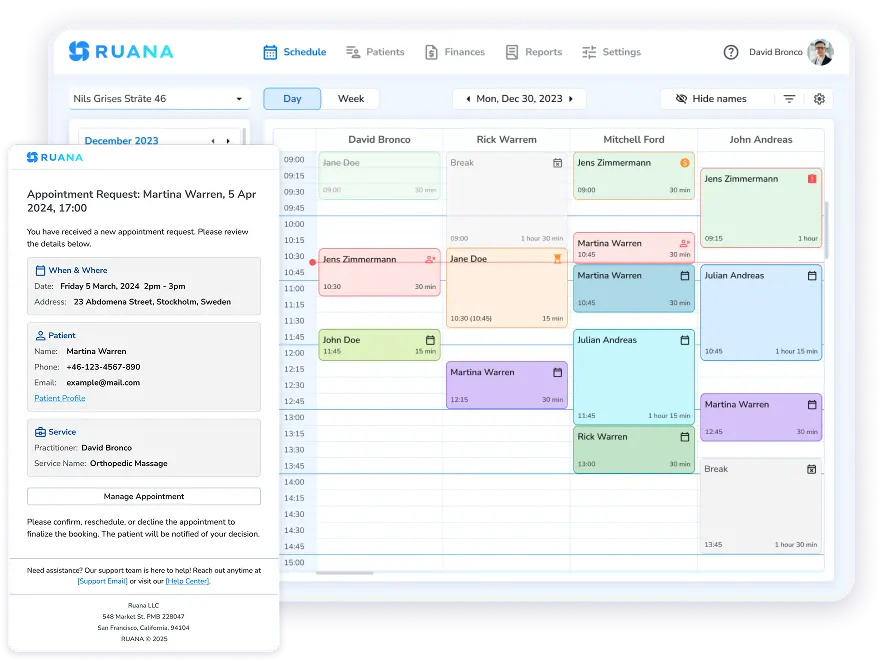
Offering online booking allows patients to schedule appointments whenever it suits them, without having to call during office hours. This is especially important for busy professionals and parents who often book appointments outside of the traditional workday.
Consider reviewing your scheduling process from a patient’s perspective. If booking takes more than a few minutes or requires multiple steps, there may be opportunities to simplify the experience.
For many practices, modern scheduling software can help by providing online booking, appointment management, and automated confirmations in one place.
2. Send Appointment Reminders Automatically
Patients miss appointments for many reasons, but often it’s simply because life gets busy and the appointment slips their mind.
Automated appointment reminders are one of the most effective ways to improve attendance and decrease the patient no-show rate. Sending reminders by email, text message, or both helps patients remember upcoming visits and gives them enough notice to reschedule if needed.
A multi-touch reminder sequence often works best. For example:
Confirmation immediately after booking
Reminder one week before the appointment
Reminder 24-48 hours before the appointment
In addition to reducing no-shows, reminders reinforce the importance of the appointment and keep your practice top of mind between visits.
Patients are more likely to return when they understand where their care is heading.
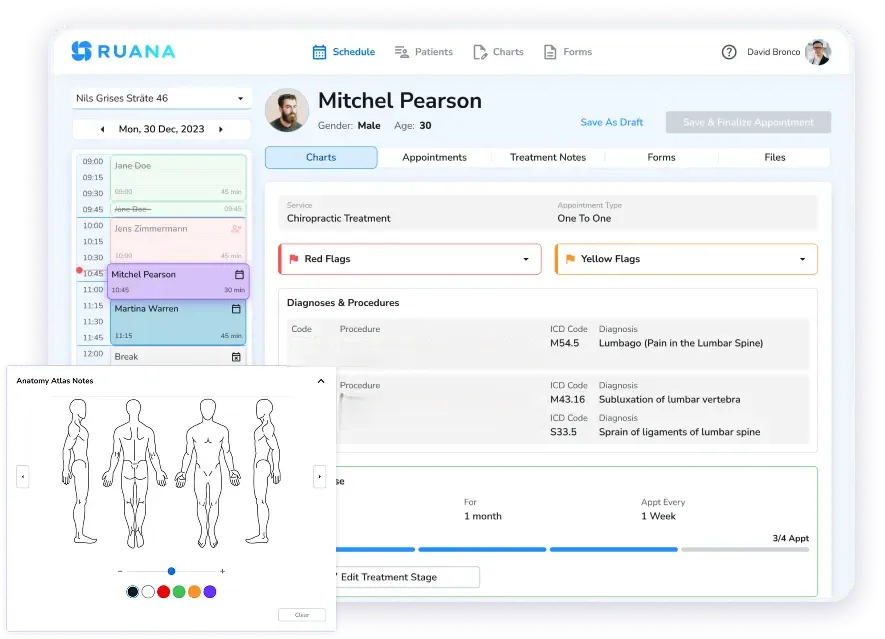
Rather than focusing only on the current appointment, help patients see the bigger picture by outlining a clear treatment plan. Explain their goals, recommended frequency of visits, expected milestones, and what progress may look like over time.
When patients understand why future appointments matter, they are less likely to view care as a one-time service and more likely to remain committed to the process.
This approach can be particularly effective for chiropractors, massage therapists, and other wellness professionals whose patients often benefit from ongoing care and maintenance programs.
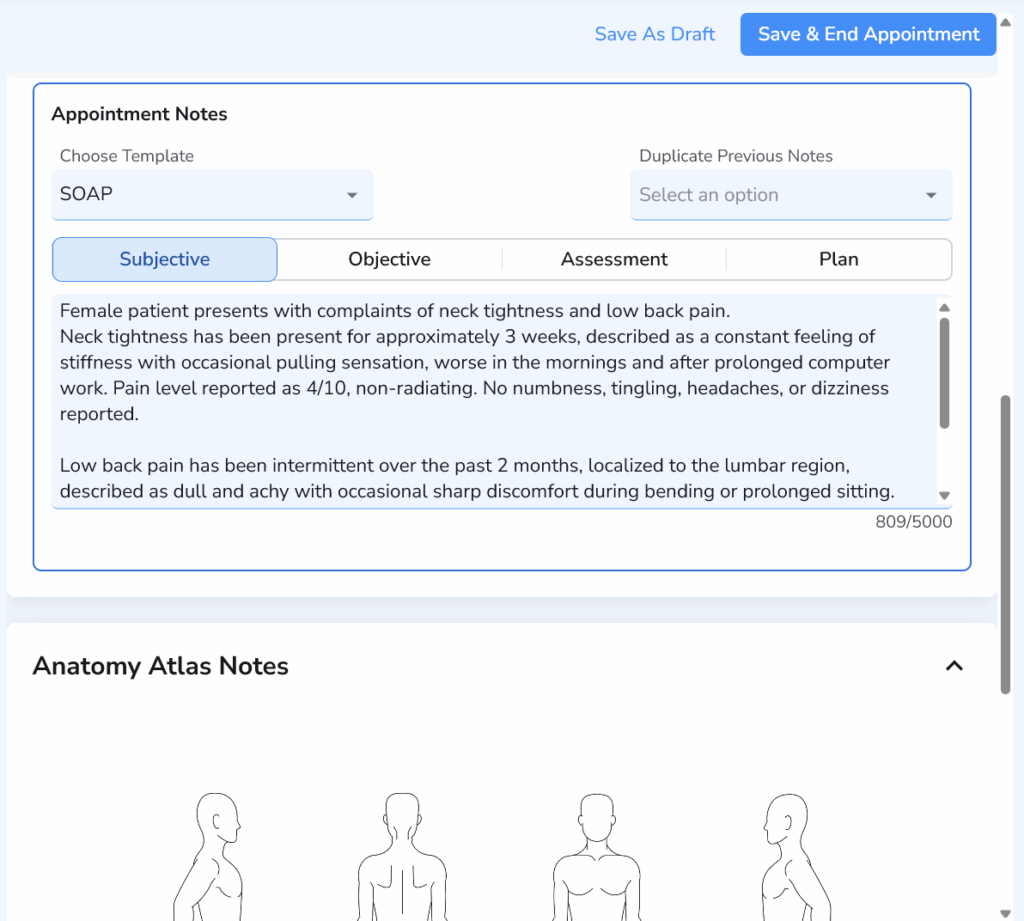
Documenting treatment plans and progress notes consistently also helps create a more personalized experience during future visits.
Document patient visits using traditional SOAP notes with a clean, distraction-free interface.
4. Schedule the Next Visit Before Patients Leave
One of the simplest strategies for patient retention is also one of the most overlooked.
Instead of asking patients to contact the practice later, encourage them to schedule their next appointment before checking out. But try not to appear pushy. A simple question, such as, “Would you like to reserve your next appointment now?” can significantly increase rebooking rates.
For patients following a treatment plan, pre-scheduling future visits also helps maintain consistency and improves adherence to care recommendations.
Many practices find that integrating scheduling, patient records, and front-desk workflows into one system makes this process easier for both staff and patients.
5. Follow Up After Appointments
Thoughtful follow-up communication shows patients that you care about their progress and helps maintain engagement between visits.
Depending on your practice, follow-ups might include:
Post-visit check-in messages
Home care recommendations
Wellness tips and educational content
Appointment reminders for upcoming visits
Re-engagement messages for inactive patients
Even a brief follow-up can strengthen patient trust and improve the overall patient experience. Over time, these small touchpoints help build stronger relationships and increase the likelihood that patients will continue their care journey with your practice.
6. Reduce Administrative Friction
Patients expect healthcare experiences to be as convenient as the other services they use every day. Yet, lengthy paperwork, repeated data collection, and inefficient check-in procedures only create another reason for frustration.
Some simple ways to achieve a smoother administrative process include:
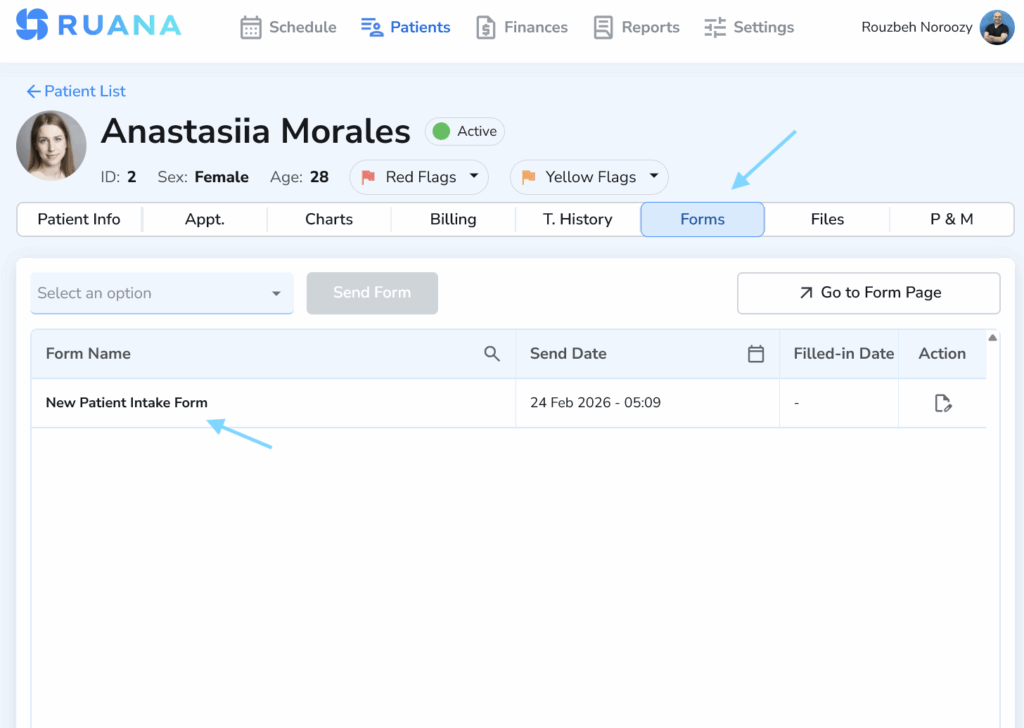
Using digital intake forms
Minimizing duplicate paperwork
Keeping patient records organized
Simplifying check-in and checkout workflows
Not only does this improve the patient experience, but it also frees up staff to focus on patient care rather than administrative routine tasks.
7. Improve the Patient Experience at Every Touchpoint
Every stage of the patient journey contributes to how patients perceive your practice. This, in its turn, creates the baselines of successful patient retention.
A positive experience at each touchpoint, including booking an appointment, completing intake forms, checking in at the front desk, receiving the care, etc., builds trust and confidence in your practice.
Reviewing the entire patient journey regularly can help identify areas where the experience can be improved.
8. Educate Patients Between Visits
Many patients leave an appointment feeling motivated but gradually lose momentum as time passes.
Providing ongoing education helps keep patients engaged between visits and reinforces the value of their treatment plan.
Depending on your specialty, this may include:
Home exercises and stretches
Self-care recommendations
Wellness tips
Nutrition guidance
Educational newsletters
Progress updates
Educational content also positions your practice as a trusted resource rather than simply a service provider. When patients continue learning from you between appointments, they are more likely to remain connected to your practice over the long term.
9. Collect and Act on Patient Feedback
What works and what doesn’t? How can you improve your services?
Patients know the answers to these questions in most cases. Regularly gather feedback to identify issues before they affect retention.
Some of the common methods can include post-care surveys, feedback forms, online reviews, or follow-up emails.
However, collecting feedback is only half the process. Patients are more likely to trust a practice when they see that concerns are acknowledged and improvements are made based on their input.
Even a small change based on the patient’s suggestions can have a meaningful impact on satisfaction and loyalty.
10. Build Strong Patient Relationships
At its core, patient retention is about relationships.
While clinical expertise is essential, strong interpersonal connections often play an equally important role in long-term loyalty.
Try building relationships while being just a human:
Listening actively during appointments
Remembering patient preferences and goals
Personalizing communication
Following up when appropriate
Celebrating milestones and progress
When patients feel like individuals rather than appointment slots on a schedule, they are more likely to trust your recommendations, remain engaged in their care, and return when they need support in the future.
11. Make Payments and Billing Simple
Confusing invoices, unclear pricing, and lengthy checkout processes can create unnecessary frustration and leave patients with a negative final impression of their visit.
Many wellness practices benefit from using practice management software that keeps scheduling, patient records, and billing in one system. This helps staff process payments more efficiently and reduces the risk of information being lost between multiple tools.
👉For example, Ruana allows practices to manage appointments, patient records, billing, insurance codes, and superbills from a single platform, helping create a faster and more organized checkout experience.
12. Track Patients Who Haven’t Returned
Many patients don’t actively decide to leave a practice. They simply get busy, postpone scheduling their next appointment, and gradually disengage.
Without a process for identifying these patients, valuable retention opportunities can be missed.
Start by regularly reviewing your patient records and creating simple re-engagement workflows. For example, you might identify patients who have not visited in:
30 days
60 days
90 days
6 months or longer
Once identified, you can send a friendly reminder, check-in message, or invitation to schedule another appointment.
This process becomes much easier when patient information, appointment history, and reporting tools are stored in a centralized system. Rather than manually reviewing spreadsheets or paper records, practices can quickly identify inactive patients and take action before they are lost entirely.
Even a small percentage of returning patients can have a meaningful impact on retention rates, revenue, and long-term practice growth.
How Practice Management Software Supports Patient Retention
Many challenges happen between appointments. Missed reminders, difficult scheduling, incomplete records, forgotten follow-ups, and inconsistent communication can all make it less likely that patients return for future care.
Practice management software helps address these issues by bringing key workflows into one system. Features such as online booking, appointment reminders, digital intake forms, patient records, SOAP notes, and reporting tools help practices create a more consistent patient experience from the first appointment to ongoing care.
Ruana combines scheduling, reminders, intake forms, documentation, billing, and patient management in a single platform. This helps practices reduce administrative workload, stay organized, and maintain stronger patient engagement throughout the entire patient journey.
Final Thoughts
Patient retention is one of the most reliable ways to grow a wellness practice sustainably. While attracting new patients will always be important, long-term success often comes from building systems that keep existing patients engaged and returning for care.
Small improvements made consistently can strengthen patient loyalty, improve outcomes, and create a healthier practice for years to come.
About the Authors
★★★★★4.9 · 329 Reviews
Rouzbeh NoroozyChiropractor & Co-Founder · Palmer West · UC Berkeley · 14 Years of ExperienceRouzbeh Noroozy is a chiropractor with 14 years of clinical experience and co-founder of Ruana practice management software. He completed his undergraduate studies at the University of California, Berkeley and graduated from the renowned Palmer College of Chiropractic West in California. As a practicing clinician and clinic owner, he understands firsthand the administrative challenges practices face — and which digital tools genuinely help streamline day-to-day operations.
Anastasiia NoroozyMedical Graduate & Co-Founder · 8 Years of ExperienceAnastasiia Noroozy is a medical graduate and co-founder of Ruana with 8 years of experience working directly with patients at the clinic in Cologne. She manages the day-to-day flow of the practice and knows every patient-facing process from the inside out — from intake and scheduling to follow-up care. Her hands-on clinical and operational experience directly shapes how Ruana is built to work in the real world.
Our team will review your inquiry and get back to you as soon as possible.
Privacy Settings
To provide the best experiences, we use technologies like cookies to store and/or access device information. Consenting to these technologies will allow us to process data such as browsing behavior or unique IDs on this site. Not consenting or withdrawing consent, may adversely affect certain features and functions.
Functional
Always active
The technical storage or access is strictly necessary for the legitimate purpose of enabling the use of a specific service explicitly requested by the subscriber or user, or for the sole purpose of carrying out the transmission of a communication over an electronic communications network.
Preferences
The technical storage or access is necessary for the legitimate purpose of storing preferences that are not requested by the subscriber or user.
Analytics
The technical storage or access that is used exclusively for statistical purposes.The technical storage or access that is used exclusively for anonymous statistical purposes. Without a subpoena, voluntary compliance on the part of your Internet Service Provider, or additional records from a third party, information stored or retrieved for this purpose alone cannot usually be used to identify you.
Marketing
The technical storage or access is required to create user profiles to send advertising, or to track the user on a website or across several websites for similar marketing purposes.
To provide the best experience for our practitioners, we use cookies to personalize content, analyze our traffic, and support our marketing efforts. By clicking 'Accept', you consent to our use of these technologies. You can manage your preferences at any time.
Functional
Always active
The technical storage or access is strictly necessary for the legitimate purpose of enabling the use of a specific service explicitly requested by the subscriber or user, or for the sole purpose of carrying out the transmission of a communication over an electronic communications network.
Preferences
The technical storage or access is necessary for the legitimate purpose of storing preferences that are not requested by the subscriber or user.
Analytics
The technical storage or access that is used exclusively for statistical purposes.The technical storage or access that is used exclusively for anonymous statistical purposes. Without a subpoena, voluntary compliance on the part of your Internet Service Provider, or additional records from a third party, information stored or retrieved for this purpose alone cannot usually be used to identify you.
Marketing
The technical storage or access is required to create user profiles to send advertising, or to track the user on a website or across several websites for similar marketing purposes.