Chiropractic Marketing: 8 Practical Strategies to Attract, Book, and Keep More Patients
02.06.26
Chiropractic marketing works best when visibility connects to a clear patient journey. This guide covers practical strategies to help clinics attract local patients, build trust, simplify booking, and keep patients engaged after the first visit.
Most chiropractic marketing advice starts with the same promise: get more visibility, bring in more patients, grow the practice.
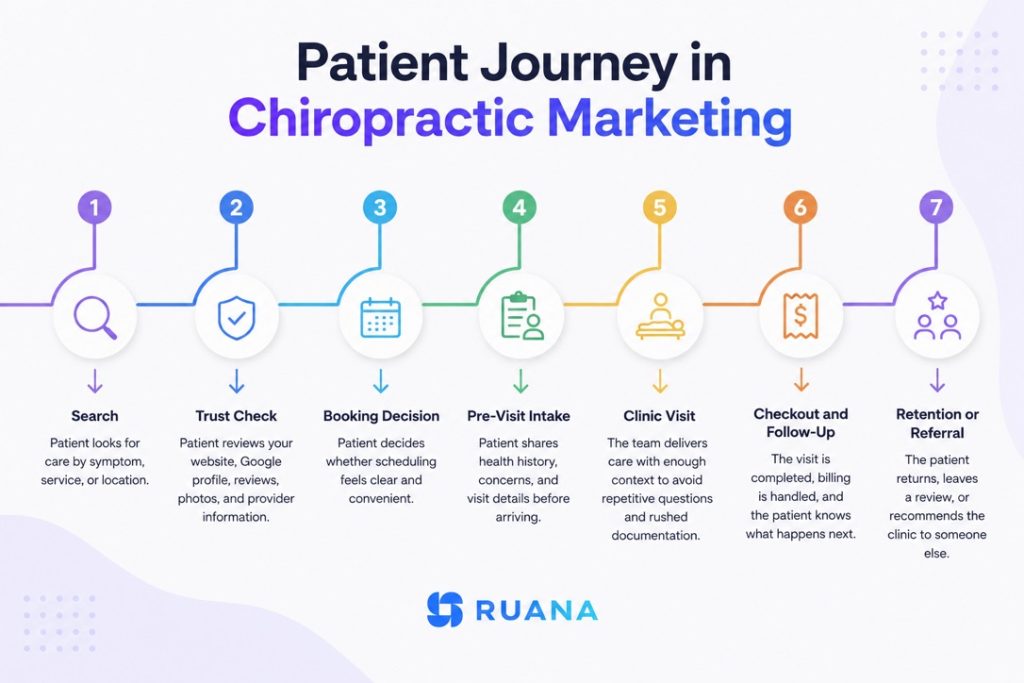
Everything sounds simple until the patient journey gets real. Searching for a chiropractor, checking the reviews, opening the websites to look for available times, and comparing the clinic with two or three others to decide whether booking feels easy enough to continue.
That last part matters more than many clinics think. In healthcare, 80% of consumers say online scheduling influences their choice of provider, and nearly one in four may leave if booking an appointment feels difficult. To make things clear, this means that marketing is no longer about showing up on Google, but creating a journey that is clear, fast, and trustworthy.
In this guide, we will break down chiropractic marketing in a practical way, explaining why the full patient journey matters and which strategies help chiropractors attract, book, and keep more patients without adding more chaos to the front desk.
At its simplest, marketing connects your clinic with people who are already looking for help with back pain, neck pain, mobility issues, posture concerns, sports injuries, wellness care, or recovery after an accident.
That connection can happen through Google search, local SEO, online reviews, social media, referral relationships, paid ads, patient recommendations, or community outreach. Advertising is part of that mix, but it is only one piece of the system.
A Google ad may bring someone to your website. Social media posts may introduce your clinic to a local audience. Referral cards may remind a patient to recommend you to a friend. Those channels can create attention, but attention alone does not fill the schedule.
A patient still needs to understand whether they can trust you or not. If the website is unclear, booking requires too much effort, intake happens manually, or follow-up depends on someone remembering it later, marketing starts creating extra work instead of cleaner growth.
Therefore, marketing for chiropractors should usually support three practical goals:
Attracting local patients who are actively searching for chiropractic care
Building trust through reviews, educational content, provider credibility, and clear communication
Making booking and follow-up easier so interest can turn into actual appointments
For small chiropractic practices, this is especially important. Most patients are local, comparison-driven, and convenience-sensitive. They may find your clinic through search or social media, but they decide based on trust, clarity, and ease.
Why Chiropractic Marketing Needs a Full Patient Journey
Chiropractic marketing becomes expensive when clinics treat it as a traffic problem.
More website visits, ad clicks, or social media reach can look good on a report. But those numbers do not automatically mean more patients. You still need to convert that attention into booked appointments, visits, follow-ups, reviews, and returning patients.
That is where the full patient journey matters.
Patients tend to make local, trust-based decisions, meaning every step of the journey can either reduce the doubt or give them another reason to leave.
The Real Gap Is After the First Click
Your competitors may focus most of their marketing energy on visibility. They want to rank higher, run ads, post more often, or get more traffic.
This shouldn’t be your case, though.
Those things can help, but they only start the process. The patient still has to move through the next steps:
Can they quickly understand what the clinic treats?
Do the reviews support trust?
Is there a clear way to book?
Can intake be completed before the visit?
Does the clinic follow up after the appointment?
Can the team see which source brought the patient in?
When the whole workflow appears to be disconnected, marketing brings more wasted dollars than results. You may pay to attract a patient, then lose them through a slow booking process, unclear communication, missed reminders, or inconsistent follow-up.
Better Marketing Tracks Outcomes, Not Only Activity
Clicks, calls, impressions, and reach are useful signals. Still, they do not show the full value of a marketing channel.
A stronger question is: Did this marketing source lead to a booked visit, a completed appointment, a returning patient, or a referral?
That difference matters. A Google ad that brings ten inquiries but only one completed visit may be weaker than a referral source that brings three highly committed patients
A Connected Workflow Protects the Marketing Investment
For small chiropractic practices, this is especially important. More leads can quickly turn into more admin work when scheduling, intake, reminders, documentation, billing, and follow-up happen in separate places. Growth should not make the front desk slower or the provider’s day heavier.
The clinics that market well are usually not chasing every new tactic. They make each patient step easier to complete.
In chiropractic marketing, the journey is the strategy. Visibility starts the process, but the connected workflow is what turns interest into booked visits, returning patients, and stronger referrals.
8 Core Chiropractic Marketing Strategies That Actually Matter
Marketing for a chiropractic business works best when each tactic has a clear role. Some strategies help patients find the clinic. Others build trust, make booking easier, improve retention, or bring referrals.
The strongest plan usually combines several simple channels and keeps them connected to the actual patient journey.
1. Build a Website That Turns Visitors Into Bookings
As obvious as it may sound, your website is your digital visit card. It should work like a clear front desk. When a patient lands on it, they should quickly understand what you treat, where you are located, who provides care, and how to book.
For example, a patient searching for neck pain relief should not have to click through five pages to know whether your clinic can help. A strong website makes the answer visible, then gives the patient a clear next step.
Things worth considering:
Add clear service pages for common needs, such as back pain, neck pain, posture issues, sports injuries, or auto accident care.
Keep the booking button visible on key pages, especially the homepage, service pages, and contact page.
Include provider bios, clinic photos, patient reviews, hours, location, parking details, and insurance/payment information where relevant.
Make sure the mobile version is easy to read, fast to load, and simple to use with one hand.
2. Improve Local SEO and Google Business Profile Visibility
Most chiropractic searches are local. Patients often search by symptom, service, or location, then compare nearby clinics before deciding where to book.
That makes local SEO one of the most important long-term marketing strategies for chiropractors. Your clinic needs to appear where patients are already looking: Google Search, Google Maps, local directories, and review platforms.
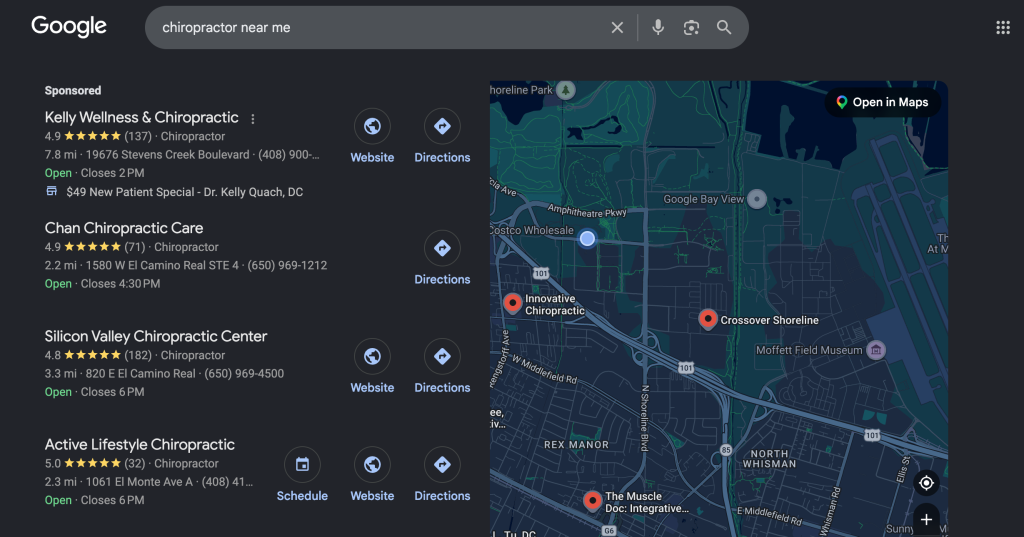
Here’s a good example of local SEO for a chiropractor.
This shows local SEO in action because the results appear directly in Google Maps with reviews, distance, hours, website, directions, and scheduling options, exactly where patients compare nearby chiropractors before booking.
Things worth considering:
Keep your Google Business Profile complete with the correct name, address, phone number, hours, website link, services, photos, and booking link.
Build service pages around real patient searches, such as “chiropractor for back pain,” “sports injury chiropractor,” or “chiropractor near [city/neighborhood].”
Keep clinic information consistent across directories, review sites, and social profiles.
Add fresh photos, answer common questions, and update your profile when hours, services, or booking options change.
3. Use Reviews as a Trust-Building Channel
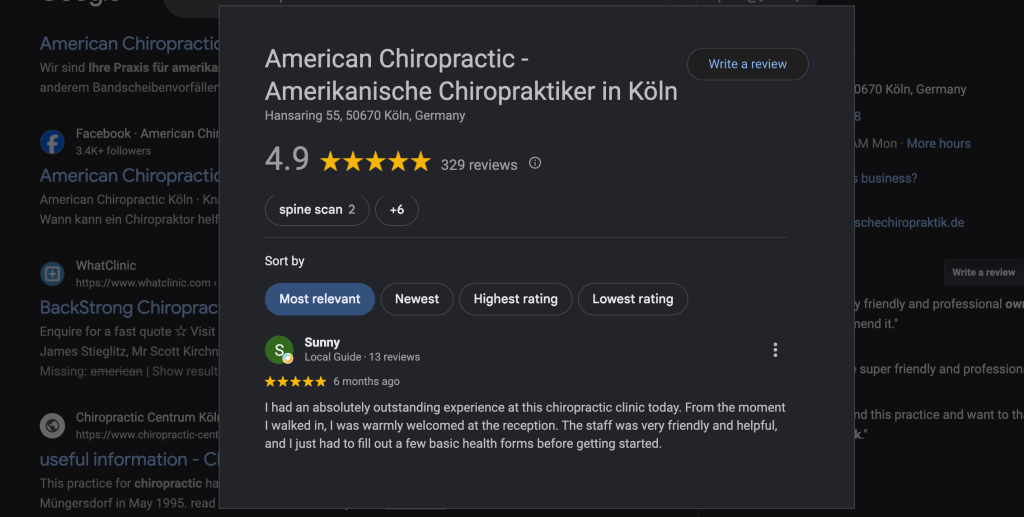
Reviews often shape the patient’s decision before they ever contact the clinic. A strong review profile can make a new patient feel safer choosing you, especially when they are comparing several local options.
Reviews also support local visibility. Google uses review signals as part of how patients discover and evaluate nearby businesses, so review generation should be part of the marketing workflow, not an occasional afterthought.
Things worth considering:
Ask for reviews after positive visits, when the patient experience is still fresh.
Make the process simple with a direct review link, QR code, or follow-up message.
Respond to reviews professionally, including negative ones, without discussing private health details.
Train the front desk to ask naturally instead of using pressured or scripted language.
4. Create Educational Content Around Patient Questions
Chiropractic content should answer the questions patients already have before they book. This can include blog posts, short videos, FAQs, service pages, and social media posts.
The best content is usually practical, local, and patient-centered. It should help people understand what to expect, when to seek care, and how the clinic approaches common concerns.
Things worth considering:
Build content around common patient questions, such as “What happens during a first chiropractic visit?” or “When should I see a chiropractor for neck pain?”
Create separate pages for major services or conditions instead of putting everything on one general page.
Use clear, careful language and avoid promising specific medical outcomes.
Repurpose longer blog topics into short social posts, email tips, or FAQ sections.
Educational content helps patients move from uncertainty to action. It also gives search engines more context about your clinic’s services, location, and expertise.
5. Use Chiropractor Social Media Marketing Without Turning It Into a Full-Time Job
Social media can help chiropractors build familiarity, but it should not consume the clinic’s entire week. The purpose is not to post endlessly but to stay visible, useful, and recognizable to the local audience.
💡A small clinic can usually do more with one or two consistent platforms than with five neglected ones.
Things worth considering:
Focus on simple educational posts, clinic updates, provider introductions, and common patient questions.
Use short videos to explain what patients can expect before, during, and after a visit.
Avoid posting patient details without proper consent, even if the story seems harmless.
Add clear calls to action, such as booking a visit, reading a related guide, or calling the clinic.
6. Run Paid Advertising Carefully
Paid advertising can help chiropractors reach patients faster, especially for high-intent local searches. Google Ads can target people actively looking for chiropractic care, while Facebook and Instagram ads can support awareness or reactivation campaigns.
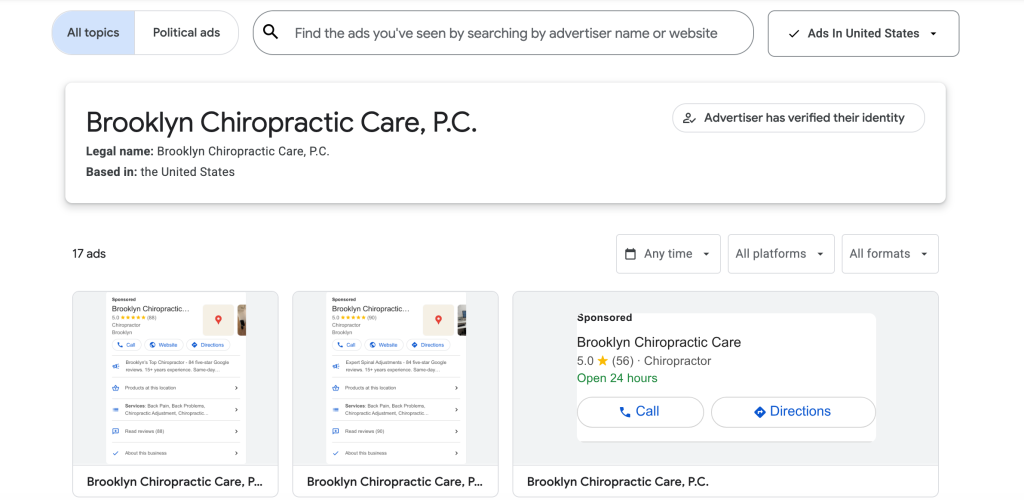
💡Tip: Use Google Ads Transparency Center to review how other chiropractic clinics advertise. Look at their offer, wording, call-to-action, and landing page angle, then identify what feels clear, overused, or weak. The goal is not to copy competitors, but to understand the local ad landscape before spending the budget.
The risk is that ads can waste money quickly if they send patients into a weak booking process.
Things worth considering:
Start with a small, focused campaign around specific services, locations, or patient needs.
Send traffic to a relevant landing page instead of a generic homepage.
Track calls, form submissions, bookings, and completed visits, not only clicks.
Review search terms and ad performance regularly to avoid paying for irrelevant traffic.
Advertising should be treated as a controlled test. If the clinic cannot track what happens after the click, it becomes hard to know whether the campaign is actually working.
7. Build Referral Relationships With Local Professionals
Professional referrals can be especially valuable because they start with borrowed trust. A patient who hears about your clinic from a massage therapist, fitness trainer, physical therapist, attorney, or local wellness provider may arrive with more confidence than someone who found you cold online.
This strategy takes time, but it can create steady, higher-quality patient flow when the relationships are genuine.
Things worth considering:
Identify local professionals who serve similar patients without directly competing with your clinic.
Make the referral process clear, simple, and professional
Share educational resources that help partners understand when a patient may need chiropractic care.
Stay consistent with follow-up, without turning the relationship into a one-time introduction.
Referral marketing is strongest when it is built on reliability. Other professionals are more likely to refer when they trust the clinic to communicate clearly, treat patients professionally, and keep the experience organized.
Mutual partnership is also a good idea. You refer to them, while they refer to you in return. A win-win for both sides.
8. Keep Existing Patients Engaged
Patient retention is one of the most overlooked parts of chiropractic marketing. Many clinics focus heavily on new patient acquisition while losing opportunities with people who already know and trust them.
Things worth considering:
Use appointment reminders to reduce no-shows and last-minute confusion.
Follow up after visits when the patient needs next steps, scheduling support, or additional information.
Create reactivation campaigns for patients who have not visited in a while.
Track returning patients, referral sources, and missed appointments to understand where retention can improve.
How Practice Management Software Supports Chiropractic Marketing
Chiropractic marketing does not end when a patient clicks an ad, finds the clinic on Google, or visits the website. That is only the first step. The real test comes after the patient decides to take action.
Can they book easily? Can they complete the intake before the visit? Does the front desk have the right information? Can the provider document the visit without slowing down the day? Does the patient receive reminders and follow-up without the team chasing every detail manually?
Our professional chiropractic experience proves that practice management software supports the marketing process. It does not replace SEO, ads, social media, or referrals. Instead, does help the clinic handle the patient flow that those channels create.
For example, a chiropractic clinic may invest in local SEO and start getting more appointment requests. That sounds like a win, until the front desk has to manage calls, intake forms, reminders, payments, and documentation across separate tools. More leads can quickly become more admin work.
A connected system helps prevent that.
Practice management software can support chiropractic marketing by helping clinics:
Turn interest into bookings with online scheduling and a clearer appointment flow
Reduce friction before the visit with digital intake forms and patient information collected in advance
Improve show-up rates with automated appointment reminders
Keep visits organized with SOAP notes, charting, documentation, and patient history in one place
Make checkout smoother with billing tools, invoices, superbills, and payment-related records
Track clinic activity through reports and analytics that show how the practice is growing
Support retention with cleaner follow-up and easier patient communication
Conclusion: Chiropractic Marketing Works Best When the Clinic Can Handle the Growth
Visibility matters, but it is only useful when the next steps are clear enough for patients to act.
The practical takeaway is simple: marketing brings patients to the door, but clinic operations decide what happens next. If booking is slow, intake is scattered, documentation takes too long, or follow-up is inconsistent, the clinic loses part of the value created by its marketing.
Ruana helps protect that value by making the next step easier for both the patient and the team. When scheduling, intake, documentation, billing, reminders, and patient records work together, marketing has a cleaner path from attention to booked visits, completed care, stronger retention, and better referrals.
For chiropractors, that is where growth becomes more manageable. The clinic not only attracts more patients. It becomes better prepared to serve them.
About the Authors
★★★★★4.9 · 329 Reviews
Rouzbeh NoroozyChiropractor & Co-Founder · Palmer West · UC Berkeley · 14 Years of ExperienceRouzbeh Noroozy is a chiropractor with 14 years of clinical experience and co-founder of Ruana practice management software. He completed his undergraduate studies at the University of California, Berkeley and graduated from the renowned Palmer College of Chiropractic West in California. As a practicing clinician and clinic owner, he understands firsthand the administrative challenges practices face — and which digital tools genuinely help streamline day-to-day operations.
Anastasiia NoroozyMedical Graduate & Co-Founder · 8 Years of ExperienceAnastasiia Noroozy is a medical graduate and co-founder of Ruana with 8 years of experience working directly with patients at the clinic in Cologne. She manages the day-to-day flow of the practice and knows every patient-facing process from the inside out — from intake and scheduling to follow-up care. Her hands-on clinical and operational experience directly shapes how Ruana is built to work in the real world.
Our team will review your inquiry and get back to you as soon as possible.
Privacy Settings
To provide the best experiences, we use technologies like cookies to store and/or access device information. Consenting to these technologies will allow us to process data such as browsing behavior or unique IDs on this site. Not consenting or withdrawing consent, may adversely affect certain features and functions.
Functional
Always active
The technical storage or access is strictly necessary for the legitimate purpose of enabling the use of a specific service explicitly requested by the subscriber or user, or for the sole purpose of carrying out the transmission of a communication over an electronic communications network.
Preferences
The technical storage or access is necessary for the legitimate purpose of storing preferences that are not requested by the subscriber or user.
Analytics
The technical storage or access that is used exclusively for statistical purposes.The technical storage or access that is used exclusively for anonymous statistical purposes. Without a subpoena, voluntary compliance on the part of your Internet Service Provider, or additional records from a third party, information stored or retrieved for this purpose alone cannot usually be used to identify you.
Marketing
The technical storage or access is required to create user profiles to send advertising, or to track the user on a website or across several websites for similar marketing purposes.
To provide the best experience for our practitioners, we use cookies to personalize content, analyze our traffic, and support our marketing efforts. By clicking 'Accept', you consent to our use of these technologies. You can manage your preferences at any time.
Functional
Always active
The technical storage or access is strictly necessary for the legitimate purpose of enabling the use of a specific service explicitly requested by the subscriber or user, or for the sole purpose of carrying out the transmission of a communication over an electronic communications network.
Preferences
The technical storage or access is necessary for the legitimate purpose of storing preferences that are not requested by the subscriber or user.
Analytics
The technical storage or access that is used exclusively for statistical purposes.The technical storage or access that is used exclusively for anonymous statistical purposes. Without a subpoena, voluntary compliance on the part of your Internet Service Provider, or additional records from a third party, information stored or retrieved for this purpose alone cannot usually be used to identify you.
Marketing
The technical storage or access is required to create user profiles to send advertising, or to track the user on a website or across several websites for similar marketing purposes.