What Is a Superbill? A Practical Guide for Chiropractic and Massage Therapy Practices
19.05.26
Patients usually ask for a superbill at the most inconvenient moment: after the visit, during checkout, when the front desk is already handling payments, scheduling, forms, and the next patient in line. For chiropractors and massage therapists, that small request can quickly turn into another admin task. The patient wants to submit something to the […]
Patients usually ask for a superbill at the most inconvenient moment: after the visit, during checkout, when the front desk is already handling payments, scheduling, forms, and the next patient in line.
For chiropractors and massage therapists, that small request can quickly turn into another admin task. The patient wants to submit something to the insurance company. The practice needs to provide a document with the right visit details, provider information, service charges, and, when needed, diagnosis and procedure codes.
A regular receipt often will not be enough.
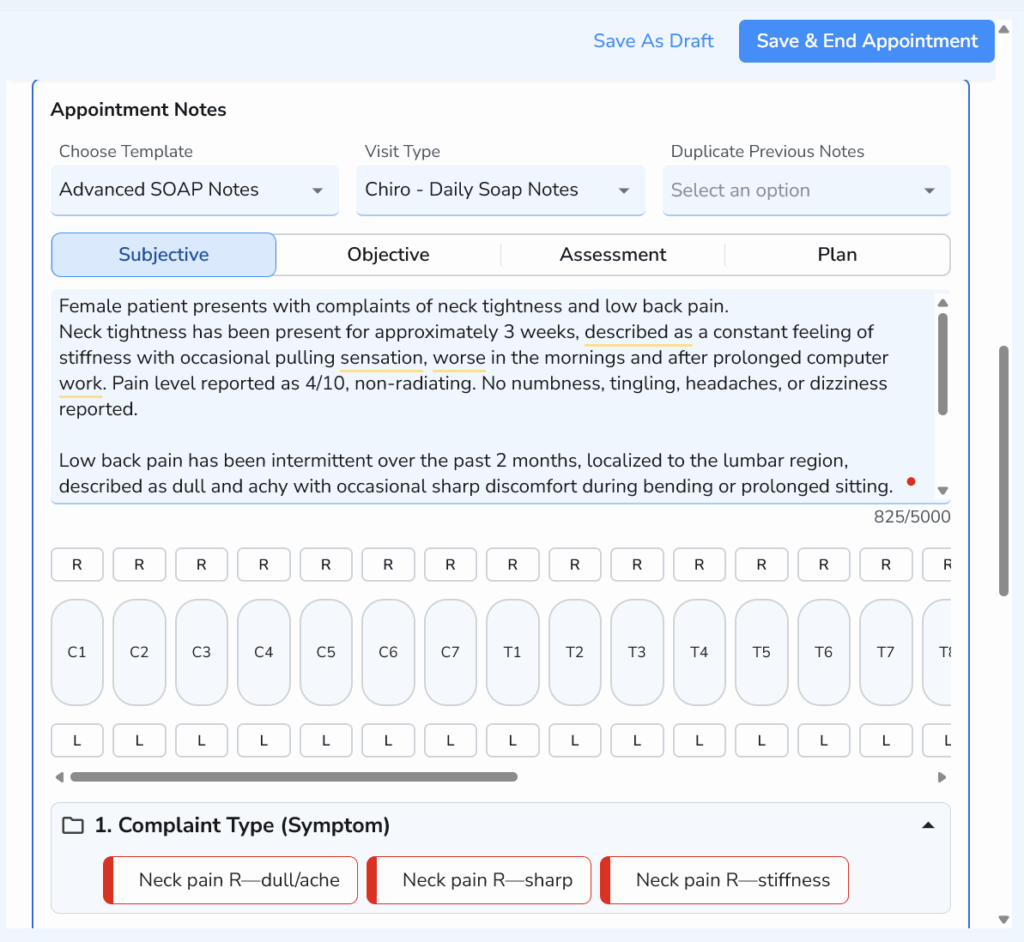
A superbill gives patients the detailed visit, payment and billing record they may need for possible reimbursement. For the practice, it also depends on how well the visit is documented in the first place. Clean SOAP notes, accurate service details, and organized billing information make the whole process easier for both the patient and the clinic.
A superbill is a detailed document that a healthcare or wellness provider gives to a patient after a visit. Patients can use it to request reimbursement from their insurance company, especially when they paid out of pocket or saw an out-of-network provider.
It is more detailed than a regular receipt. A superbill usually includes the provider’s information, patient details, date of service, services performed, fees, payments, and billing codes when those are needed. In chiropractic and massage therapy practices, it often helps patients show their insurer what care they received and how much they paid.
For the practice, a superbill is part of the larger documentation workflow. The cleaner the visit note, service details, and billing information are, the easier it is to create a superbill that patients can actually use.
What Is a Superbill in Medical Billing?
In medical billing, a superbill is an itemized record of a patient visit that contains the details an insurance company may need to review a reimbursement request. It helps translate the appointment into billing language, showing who provided the service, what was performed, why the care was needed, how much was charged, and how much the patient paid.
The document usually includes,
Provider details, such as clinic name, address, contact information, NPI, or tax ID when applicable
Patient details, including name, date of birth, and insurance information if collected
Visit details, such as date of service, service description, fees, and payment amount
Billing codes, including CPT and ICD-10 codes, when the payer requires them
In practice, the superbill depends on the quality of the documentation behind it. If SOAP notes, intake details, treatment records, and payment information are organized, the superbill is easier to prepare and less likely to miss important details.
Superbill vs Invoice vs Receipt
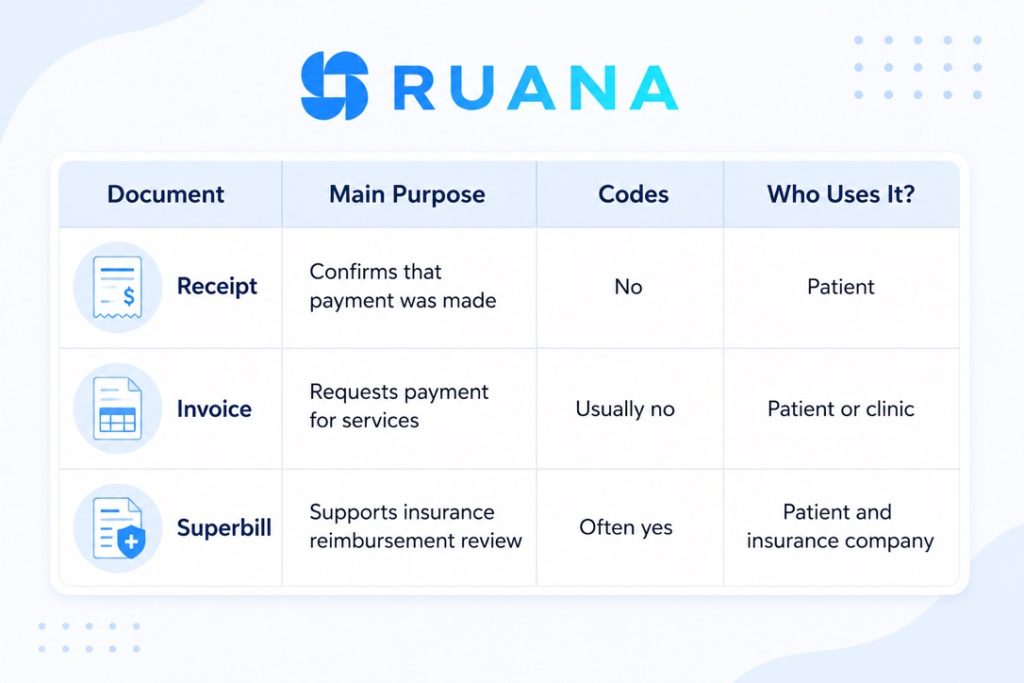
A superbill, invoice, and receipt can look similar at first because all three may include payment details. The difference is in how they are used. A receipt proves that a patient paid. An invoice requests payment. A superbill gives the patient a more detailed document that they may submit to insurance for possible reimbursement.
For chiropractic and massage therapy practices, this difference matters during checkout. A patient who only needs proof of payment may be fine with a receipt. A patient planning to file an out-of-network claim will usually need a superbill with service details, provider information, fees, and billing codes when applicable.
How Do Superbills Work?
Superbills usually come into play when the patient pays the practice directly, then submits documentation to their insurance company for possible reimbursement. This is common in out-of-network care, cash-pay visits, and some chiropractic or massage therapy settings where the provider does not submit claims on the patient’s behalf.
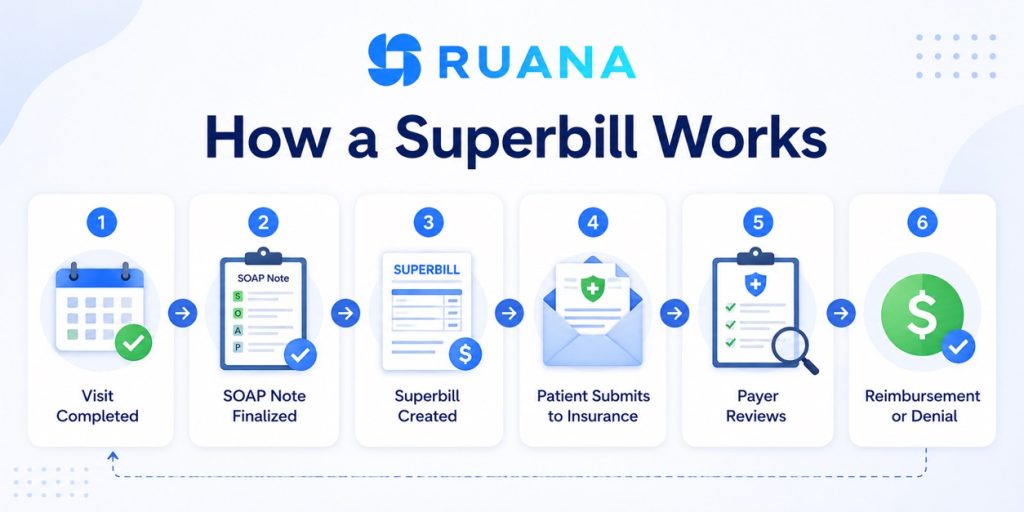
The process usually looks like this:
The patient receives care and pays for the visit.
Service provider documents the visit, including the reason for care, services performed, and treatment details.
The practice creates a superbill with the visit, billing, provider, and payment information.
The patient submits the superbill to their insurance company.
Your insurance company reviews the request based on the patient’s plan benefits.
The patient may receive reimbursement, a deductible credit, or a denial, depending on coverage rules.
This is where documentation becomes important. A superbill should reflect what actually happened during the visit, so completed SOAP notes, accurate service details, and clean payment records all matter. When those pieces are organized before checkout, creating a superbill becomes much easier and less prone to missing information.
When Do Patients Need a Superbill?
Patients usually need a superbill when they pay for care upfront and want to submit the visit to their insurance company for possible reimbursement.
This often applies when:
Provider is out of network
Patient paid out of pocket
The clinic does not submit insurance claims directly
Patient wants the payment applied to an out-of-network deductible
Insurer asks for detailed service and payment information
💡A superbill does not guarantee reimbursement. It simply gives the insurance company the details needed to review the visit based on the patient’s plan.
What Information Should Be Included on a Superbill?
The exact requirements and sections may vary depending on the practice, but the main goal is to give the insurance company enough information to identify the patient, the provider, the service, and the payment.
At a minimum, a superbill usually includes:
Patient information, including full name, date of birth, and contact details
Provider information, including clinic name, address, phone number, credentials, NPI, or tax ID when applicable
Visit details, including date of service, place of service, service type, and provider name
Billing details, including service fees, amount paid, balance, CPT codes, and ICD-10 codes when required
For chiropractic and massage therapy practices, the superbill should match the actual visit record. If your SOAP notes say one thing and the superbills say another, the patient may run into problems when submitting it to insurance.
Here’s a more detailed overview of this:
Superbill Template Checklist for Chiropractors and Massage Therapists
You can use this checklist as a practical starting point.
Superbill Field
What to Include
Patient details
Full name, date of birth, contact information
Insurance details
Insurance company, member ID, group number, if collected
Date of service, place of service, appointment type
Service details
Service description, duration, units, treatment type
Codes
CPT codes, ICD-10 codes, modifiers, when needed
Payment details
Fee charged, amount paid, remaining balance
Verification
Provider signature or authorized clinic confirmation
Don’t complicate the process. The goal is simple: make the visit easy for the payer to review and easy for the patient to submit.
Are CPT and ICD-10 Codes Always Required?
CPT and ICD-10 codes are often required when a patient submits a superbill for insurance reimbursement. CPT codes describe the service provided, while ICD-10 codes explain the diagnosis or reason for care.
For chiropractors, these codes are usually an important part of the superbill because insurers often need to connect the service to medical necessity. Massage therapists may also need to include CPT codes to prove that the service was medically necessary.
To be on the safe side, create superbills with complete and accurate visit details, using codes only when they match the documented service.
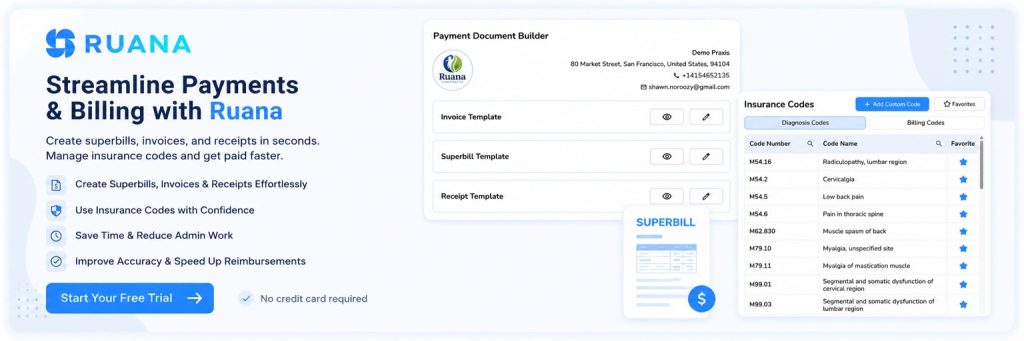
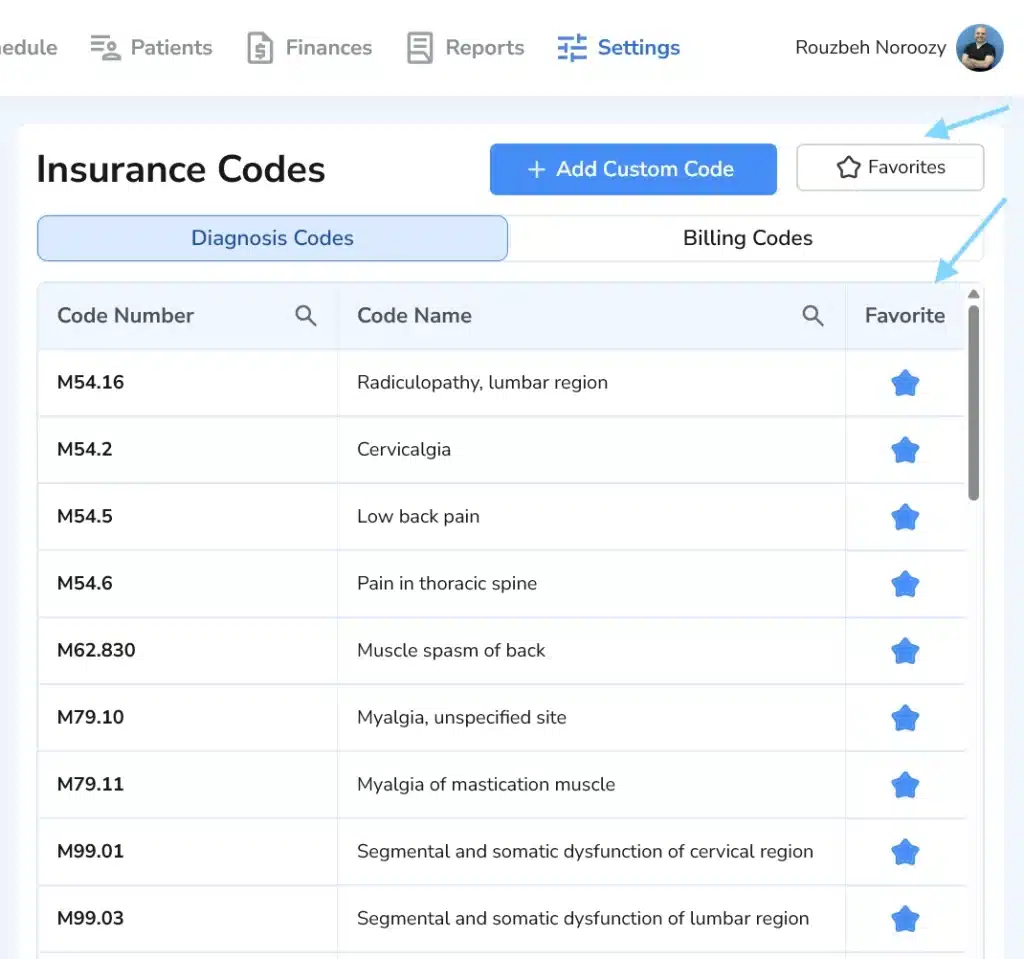
💡 Tip: If you use the same billing codes regularly, practice management software like Ruana can help you save them as favorites. Your most-used codes appear first in the billing workflow, so you can add them faster without scrolling through long code lists every time.
Superbill Example: What It Looks Like in Practice
A superbill does not need to look complicated, but it does need to be complete. The goal is to give the patient a clean document they can submit to their insurance company without needing to explain the visit from scratch.
Here is a simplified example of what a superbill may look like (feel free to copy this):
Patient name
Jane Smith
Date of service
March 12, 2026
Provider
ABC Chiropractic Clinic
Service
Chiropractic adjustment
Service fee
$85
Amount paid
$85
Balance
$0
Billing codes
CPT and ICD-10 codes, when applicable
Provider details
Clinic address, phone number, NPI, or tax ID when needed
This is only a basic example. The actual superbill should match the service provided, the provider’s credentials, the payer’s requirements, and the documentation in the patient’s record.
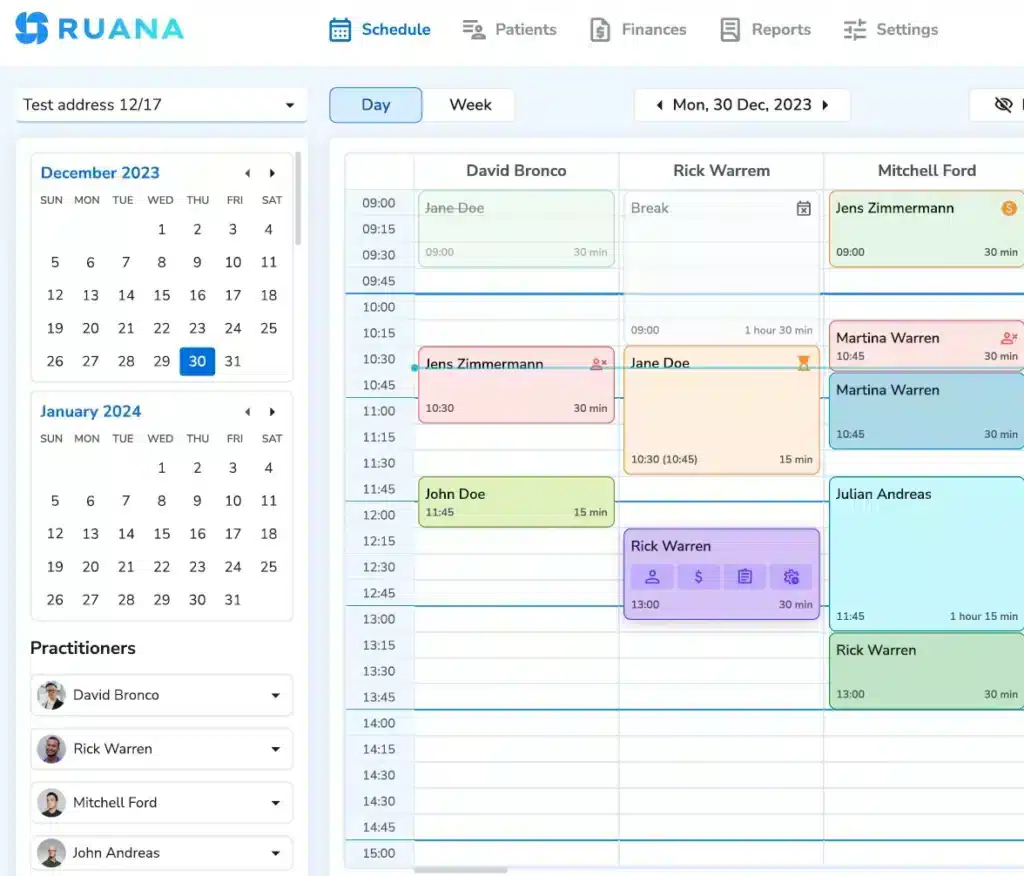
With digital practice management software, superbills can be created from existing patient, appointment, documentation, and billing details instead of being built manually after each visit. In Ruana, this fits naturally with the broader workflow of SOAP notes, billing, and patient records.
Chiropractic Superbill Example
A chiropractic superbill should clearly connect the patient’s reason for care with the service provided. Insurance companies often look for enough detail to understand the visit, the diagnosis, and the treatment performed.
For chiropractors, this usually means the superbill should be supported by clear documentation, including:
The patient’s complaint or condition
The service performed during the visit
Diagnosis and procedure codes, when required
Fees, payments, and provider credentials
This is where SOAP notes matter. If the superbill lists a service, the patient record should support it. Clean documentation helps reduce confusion when patients submit the superbill to their insurer.
Massage Therapy Superbill Example
Massage therapy superbills can be more conditional because insurance coverage depends heavily on the patient’s plan. Some insurers may require proof of medical necessity, a referral, specific diagnosis codes, or certain provider credentials before they consider reimbursement.
For massage therapists, a strong superbill should usually include:
Session date and duration
Service description
Provider credentials and clinic details
Amount charged and paid
Codes or referral details, when required
A regular receipt may only show that the client paid. A superbill gives the insurer more context about the session and helps the client submit a more complete reimbursement request.
Common Superbill Mistakes Delaying Reimbursement
Even if the visit went smoothly, small gaps can create problems for the patient.
Let’s see some of the most common superbill mistakes and their solutions.
Missing Provider or Patient Details
A superbill needs to clearly show who received care and who provided it. If the patient’s name, date of birth, clinic address, provider credentials, NPI, tax ID, or contact information is missing, the insurance company may not have enough information to process the request.
The fix is simple: keep patient and provider details organized before checkout. When this information is already stored in your practice management system, the superbill is easier to create and less likely to need corrections later.
Vague Service Descriptions
A regular receipt may say “massage session” or “chiropractic visit,” but a superbill usually needs more context. The payer may need to understand what service was provided, when it happened, how much it cost, and how it connects to the patient’s reason for care.
Use clear service names and ensure the superbill matches the appointment record. Use advanced SOAP notes to have enough clinical context to support the service listed on the superbill.
Codes That Do Not Match the Visit
CPT and ICD-10 codes should reflect the actual service and the documented reason for care. Using the wrong code, copying the same code across every visit, or adding codes without proper documentation can lead to confusion, rejection, or follow-up questions.
The safer approach is to choose codes based on the visit record, not habit. If you use the same billing codes often, tools like Ruana can help you save them as favorites so they appear first in your billing workflow. That saves time without turning coding into guesswork.
Conclusion
A superbill is simple in purpose but important in practice.
For chiropractic and massage therapy practices, the quality of the superbill depends on the quality of the workflow behind it. Correct service information and organized billing records all make the process easier.
The cleaner your documentation is, the easier it becomes to create superbills that patients can actually use.
About the Authors
★★★★★4.9 · 329 Reviews
Rouzbeh NoroozyChiropractor & Co-Founder · Palmer West · UC Berkeley · 14 Years of ExperienceRouzbeh Noroozy is a chiropractor with 14 years of clinical experience and co-founder of Ruana practice management software. He completed his undergraduate studies at the University of California, Berkeley and graduated from the renowned Palmer College of Chiropractic West in California. As a practicing clinician and clinic owner, he understands firsthand the administrative challenges practices face — and which digital tools genuinely help streamline day-to-day operations.
Anastasiia NoroozyMedical Graduate & Co-Founder · 8 Years of ExperienceAnastasiia Noroozy is a medical graduate and co-founder of Ruana with 8 years of experience working directly with patients at the clinic in Cologne. She manages the day-to-day flow of the practice and knows every patient-facing process from the inside out — from intake and scheduling to follow-up care. Her hands-on clinical and operational experience directly shapes how Ruana is built to work in the real world.
Our team will review your inquiry and get back to you as soon as possible.
Privacy Settings
To provide the best experiences, we use technologies like cookies to store and/or access device information. Consenting to these technologies will allow us to process data such as browsing behavior or unique IDs on this site. Not consenting or withdrawing consent, may adversely affect certain features and functions.
Functional
Always active
The technical storage or access is strictly necessary for the legitimate purpose of enabling the use of a specific service explicitly requested by the subscriber or user, or for the sole purpose of carrying out the transmission of a communication over an electronic communications network.
Preferences
The technical storage or access is necessary for the legitimate purpose of storing preferences that are not requested by the subscriber or user.
Analytics
The technical storage or access that is used exclusively for statistical purposes.The technical storage or access that is used exclusively for anonymous statistical purposes. Without a subpoena, voluntary compliance on the part of your Internet Service Provider, or additional records from a third party, information stored or retrieved for this purpose alone cannot usually be used to identify you.
Marketing
The technical storage or access is required to create user profiles to send advertising, or to track the user on a website or across several websites for similar marketing purposes.
To provide the best experience for our practitioners, we use cookies to personalize content, analyze our traffic, and support our marketing efforts. By clicking 'Accept', you consent to our use of these technologies. You can manage your preferences at any time.
Functional
Always active
The technical storage or access is strictly necessary for the legitimate purpose of enabling the use of a specific service explicitly requested by the subscriber or user, or for the sole purpose of carrying out the transmission of a communication over an electronic communications network.
Preferences
The technical storage or access is necessary for the legitimate purpose of storing preferences that are not requested by the subscriber or user.
Analytics
The technical storage or access that is used exclusively for statistical purposes.The technical storage or access that is used exclusively for anonymous statistical purposes. Without a subpoena, voluntary compliance on the part of your Internet Service Provider, or additional records from a third party, information stored or retrieved for this purpose alone cannot usually be used to identify you.
Marketing
The technical storage or access is required to create user profiles to send advertising, or to track the user on a website or across several websites for similar marketing purposes.