Intake Forms for Massage Therapy: Essential Health History Templates for Modern Practices
15.01.26
Effective client intake forms are the foundation of every successful massage therapy practice. Learn how digital intake forms and health history templates can improve client safety, streamline your workflow, and reduce administrative burden while creating a more professional experience.
Effective client intake forms are the foundation of every successful massage therapy practice. These essential documents not only protect your business legally but also ensure you provide safe, personalized treatments that meet each client’s unique needs. Whether you’re a solo practitioner or managing multiple therapists, having the right intake forms and health history templates can transform your client experience while streamlining your administrative workflow.
Why Proper Massage Therapy Intake Forms Matter
Every massage therapy session should begin long before your client steps onto the table. A comprehensive intake process helps you understand your client’s medical history, current health status, and treatment goals while establishing clear boundaries and expectations. This information is crucial for providing effective treatments and avoiding potential complications.
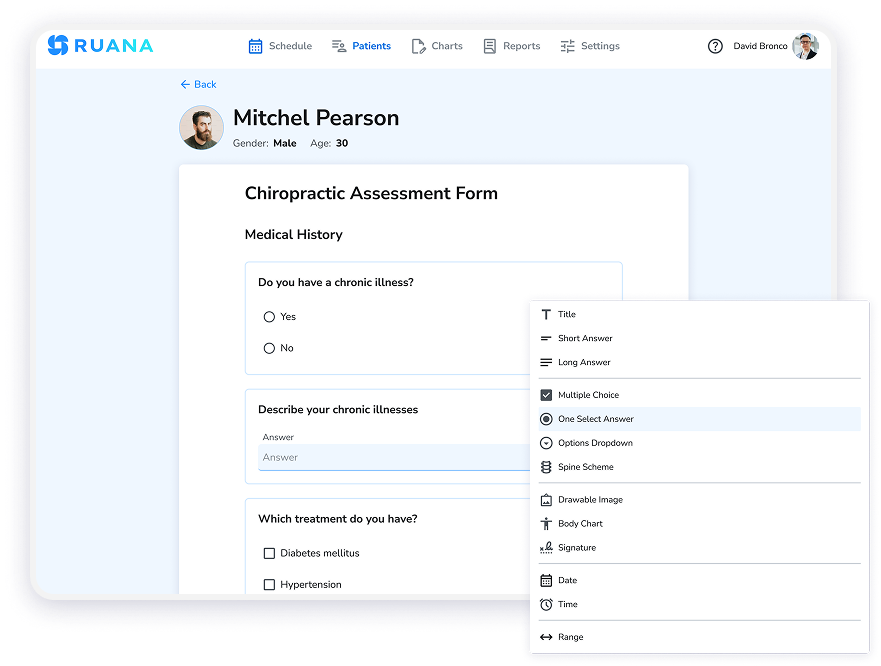
Easily create and customize digital forms for patients and practitioners.
The consequences of inadequate intake documentation can be severe, ranging from ineffective treatments to serious safety concerns or legal liability. Professional massage therapists understand that thorough documentation isn’t just about compliance—it’s about providing the highest standard of care.
Essential Components of Massage Therapy Intake Forms
Personal Information and Contact Details
Start with the basics: full name, address, phone numbers, email, emergency contact, and preferred communication methods. This information ensures you can reach clients for appointment confirmations, follow-ups, or emergencies.
Comprehensive Health History
A detailed health history forms the core of your intake process. Include sections for:
Current medications and supplements – Many medications can affect tissue sensitivity or healing response
Previous surgeries and injuries – Historical trauma sites may require modified techniques or complete avoidance
Chronic conditions – Diabetes, arthritis, fibromyalgia, and other conditions impact treatment planning
Allergies and sensitivities – Essential for selecting appropriate oils, lotions, or equipment
Recent injuries or acute conditions – Fresh injuries may require physician clearance
Pregnancy status – Requires specialized techniques and positioning considerations
Treatment Preferences and Goals
Understanding why clients seek massage therapy helps you tailor each session effectively:
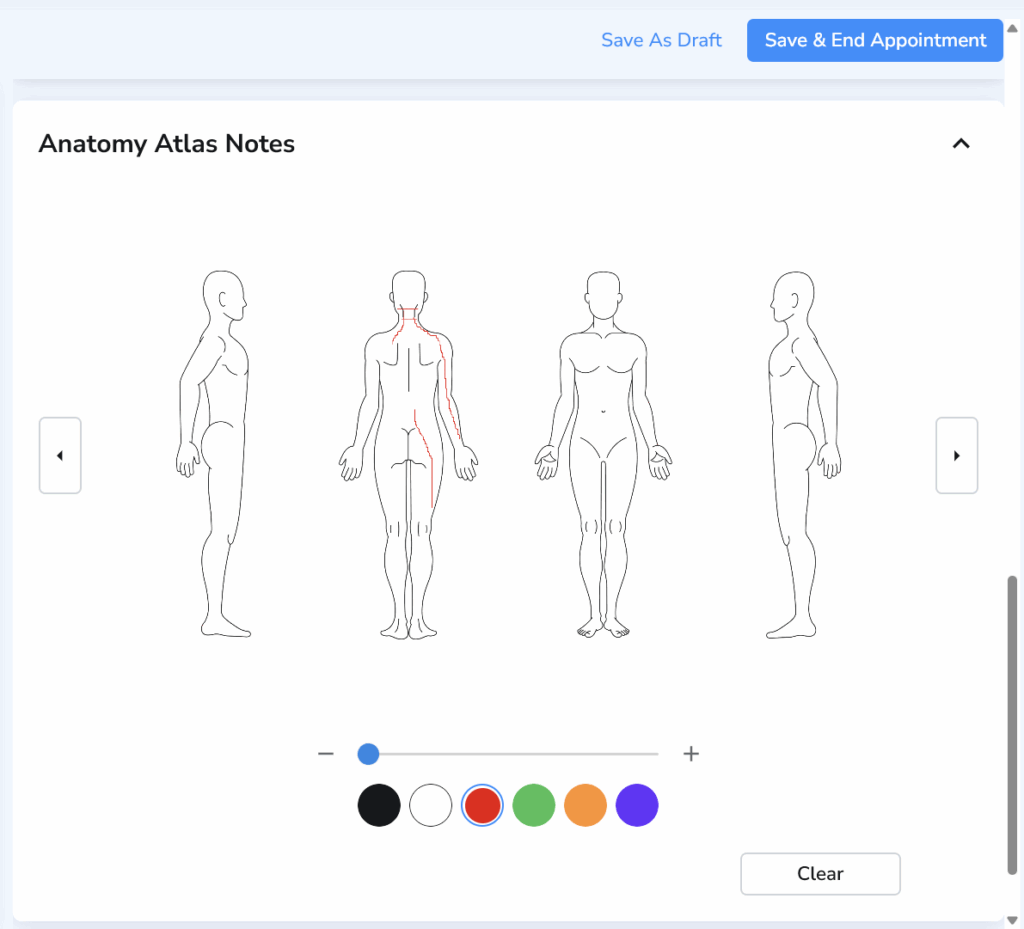
Clinicians can visually mark patient pain and symptom locations directly on an interactive anatomy model.
Consent and Legal Documentation
Professional massage therapy requires clear consent documentation:
Informed consent – Explaining potential risks, benefits, and limitations
Treatment consent – Agreement to receive massage therapy services
Privacy acknowledgments – HIPAA compliance and data protection agreements
Cancellation and payment policies – Clear business terms and conditions
Digital vs. Paper Intake Forms: Making the Right Choice
While traditional paper forms have been the standard for decades, modern massage therapy practices are increasingly adopting digital solutions for improved efficiency and client experience.
Benefits of Digital Intake Forms
Improved Efficiency: Clients can complete forms before arriving, reducing wait times and allowing you to review their information in advance. Digital forms eliminate the need for manual data entry and reduce the risk of lost paperwork. When paired with automated email and SMS appointment reminders, this creates a seamless client experience from booking to treatment.
Enhanced Accuracy: Digital forms can include validation rules to ensure all required fields are completed correctly. No more trying to decipher handwritten responses or dealing with incomplete forms.
Better Organization: Electronic forms integrate directly with your practice management system, making client information easily searchable and accessible during treatment planning. Automated reminders via email and SMS ensure clients arrive prepared with completed paperwork.
Professional Appearance: Clean, modern digital forms create a more professional first impression and can be customized to match your brand identity.
Automatic Updates: When you need to modify forms for legal compliance or practice changes, digital systems allow instant updates across all templates.
Creating Effective Health History Templates
Template Customization by Specialty
Different massage therapy specialties require specific intake considerations:
Sports Massage: Focus on athletic activities, training schedules, competition dates, and sport-specific injury patterns.
Medical Massage: Emphasize physician referrals, specific diagnoses, treatment protocols, and coordination with other healthcare providers.
Prenatal Massage: Include detailed pregnancy history, current trimester, complications, physician clearance, and positioning preferences.
Geriatric Massage: Address mobility limitations, medication effects, cognitive considerations, and fall risk factors.
Form Flow and User Experience
The order and presentation of questions significantly impact completion rates and client satisfaction:
Start with easy questions – Basic contact information builds momentum
Group related topics – Keep all medical history questions together
Use clear, simple language – Avoid medical jargon that might confuse clients
Include progress indicators – Show clients how much of the form remains
Provide help text – Explain complex questions or terms
Make required fields obvious – Use visual indicators for mandatory information
Legal Requirements and Compliance Considerations
Massage therapy intake forms must comply with various legal and professional standards:
HIPAA Compliance
All health information collected through intake forms falls under HIPAA protection. Ensure your forms include proper privacy notices and that your storage and transmission methods meet security requirements.
State Licensing Requirements
Many states have specific documentation requirements for massage therapists. Research your local regulations to ensure compliance with:
Minimum information requirements
Record retention periods
Consent documentation standards
Referral and medical clearance protocols
Liability Protection
Comprehensive intake forms serve as important legal protection by documenting:
Client acknowledgment of risks
Disclosure of relevant health conditions
Agreement to treatment protocols
Understanding of practice policies
Streamlining Your Intake Process with Technology
Modern practice management software can revolutionize your intake process, making it more efficient for both you and your clients. Professional massage therapy software offers integrated solutions that combine intake forms with scheduling, charting, billing functions, and automated communication through email and SMS reminders that significantly reduce no-shows.
Automated Form Distribution
Instead of handing clients a clipboard when they arrive, digital systems can automatically send intake forms via email when appointments are booked. This allows clients to complete forms at their convenience and arrive ready for treatment. Combined with automated email and SMS reminders, this ensures clients complete their paperwork before arrival and rarely miss appointments.
Integration with Treatment Records
The best intake solutions integrate seamlessly with your treatment notes and SOAP documentation. Information from intake forms automatically populates into your charting system, eliminating duplicate data entry and reducing errors.
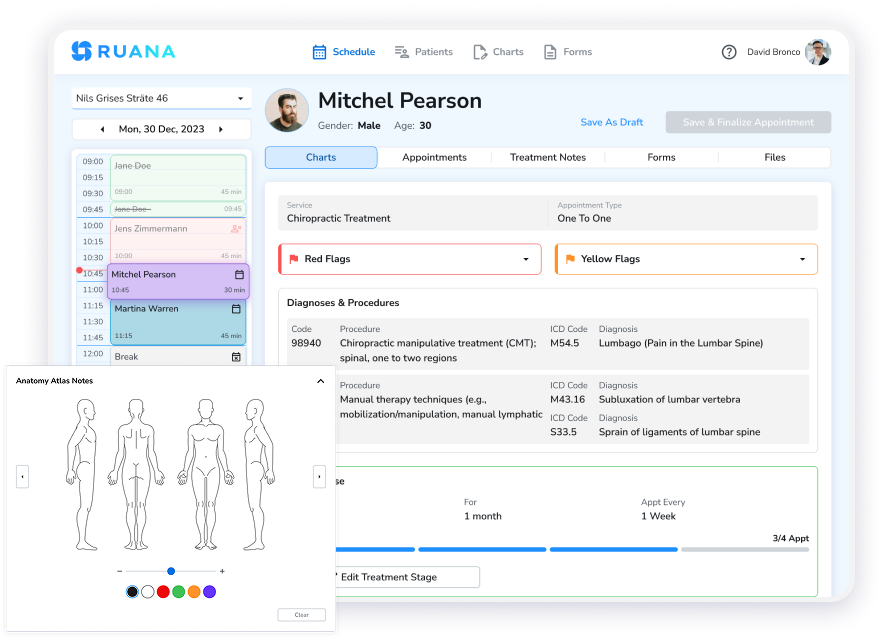
Practitioner mode screen with patient profile, diagnoses, and clinical charting.
Mobile-Friendly Design
With clients increasingly using smartphones and tablets, ensure your intake forms work perfectly on all devices. Mobile-optimized forms improve completion rates and client satisfaction. This mobile accessibility extends to appointment confirmations and reminders delivered via both email and SMS, meeting clients where they already spend their time.
Best Practices for Implementation
Staff Training
When transitioning to new intake procedures, invest time in proper staff training. Everyone should understand:
How to explain the digital process to clients
Technical troubleshooting for common issues
When to use paper backups
Privacy and security protocols
Client Education
Help clients understand the benefits of thorough intake documentation. Many appreciate knowing that detailed health information helps you provide better, safer treatments tailored to their needs.
Regular Form Updates
Review and update your intake forms regularly based on:
Changes in legal requirements
New services or specialties offered
Client feedback and suggestions
Staff input on missing information
Industry best practices evolution
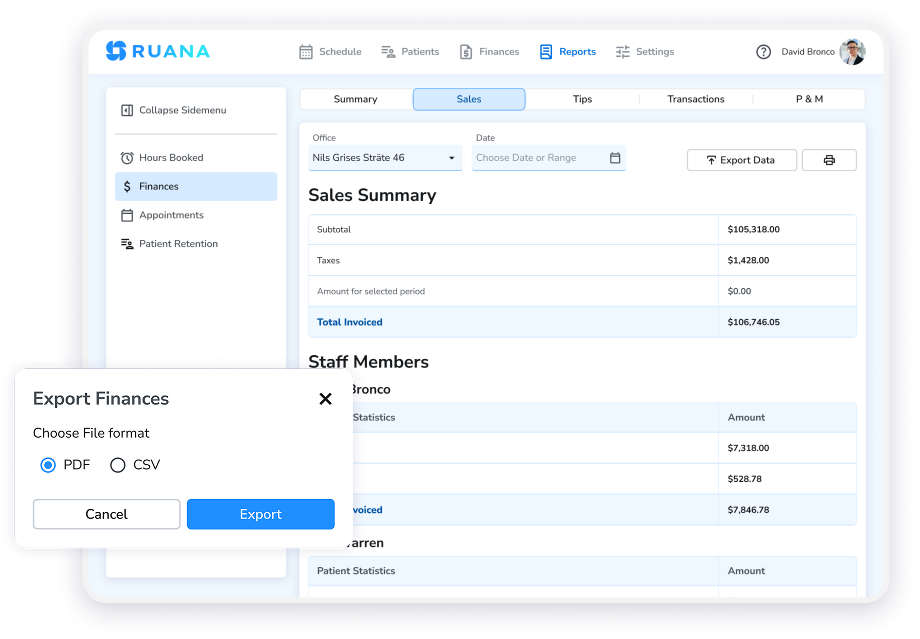
Clinic owner’s admin dashboard in Ruana software showing sales summary, revenue, and practitioner performance data.
Common Mistakes to Avoid
Over-Complicated Forms
While thoroughness is important, excessively long forms can overwhelm clients and reduce completion rates. Focus on essential information and consider breaking complex forms into shorter, themed sections.
Inadequate Follow-Up Questions
Static forms may not capture all relevant information. Include conditional logic that reveals additional questions based on previous answers. For example, if a client indicates they have diabetes, follow-up questions about management and complications become relevant.
Poor Mobile Experience
Forms that don’t work well on mobile devices frustrate clients and can result in incomplete submissions. Test your forms thoroughly on various devices and screen sizes.
Insufficient Security Measures
Health information requires robust security protection. Ensure your chosen solution offers encryption, secure data transmission, and compliance with healthcare privacy standards.
The Future of Massage Therapy Intake Forms
Technology continues to evolve, bringing new possibilities for intake form innovation:
AI-Powered Risk Assessment
Advanced systems may soon offer automated analysis of intake responses to flag potential contraindications or suggest specialized treatment protocols.
Integration with Wearable Devices
Health data from fitness trackers and medical devices could supplement traditional intake information with objective metrics about activity levels, sleep patterns, and physiological responses.
Voice-to-Text Capabilities
Speech recognition technology may allow clients to complete forms through voice commands, improving accessibility and convenience.
Choosing the Right Solution for Your Practice
When selecting an intake form solution, consider these key factors:
Ease of Use: Both you and your clients should find the system intuitive and straightforward.
Customization Options: Look for solutions that allow you to tailor forms to your specific practice needs and specialty areas.
Integration Capabilities: Ensure the system works with your existing practice management tools or offers comprehensive built-in functionality.
Communication Features: Automated email and SMS reminders reduce no-shows and keep clients engaged. SMS reminders deliver messages instantly with high open rates, while email provides detailed information and confirmation links.
Security and Compliance: Verify that the solution meets all relevant healthcare privacy and security requirements.
Support and Training: Choose providers that offer robust customer support and training resources.
Cost-Effectiveness: Consider both upfront costs and ongoing value in terms of time savings and improved client experience.
Transform Your Practice with Modern Intake Solutions
Implementing effective intake forms is one of the most impactful changes you can make to your massage therapy practice. The right system improves client safety, enhances treatment outcomes, reduces administrative burden, and creates a more professional client experience.
Comprehensive practice management solutions that include specialized massage therapy features can transform every aspect of your practice operations. From intake forms and scheduling to treatment notes and billing, integrated systems create seamless workflows that save time and reduce errors.
For massage therapists seeking specialized software that understands the unique needs of bodywork practices, modern solutions offer intuitive form builders, pre-made templates, and drag-and-drop customization options. These tools make it easy to create professional intake forms without technical expertise.
Whether you’re a solo practitioner just starting out or an established practice looking to modernize your systems, the right intake form solution can significantly improve your operational efficiency and client satisfaction. Consider how digital forms might benefit your practice and explore options that align with your specific needs and budget.
Ready to streamline your massage therapy practice with professional intake forms and comprehensive practice management tools?Discover how Ruana can transform your workflow with our specialized massage therapy software designed by practitioners, for practitioners. Join the waitlist today to be among the first to experience the future of massage practice management.
This guide provides general information about massage therapy intake forms and should not be considered legal or medical advice. Consult with professional advisors regarding specific compliance requirements in your jurisdiction.
Join the Waitlist
Please fill in the fields below and we'll add you to the Waitlist.
Your message has been successfully sent.
Our team will review your inquiry and get back to you as soon as possible.